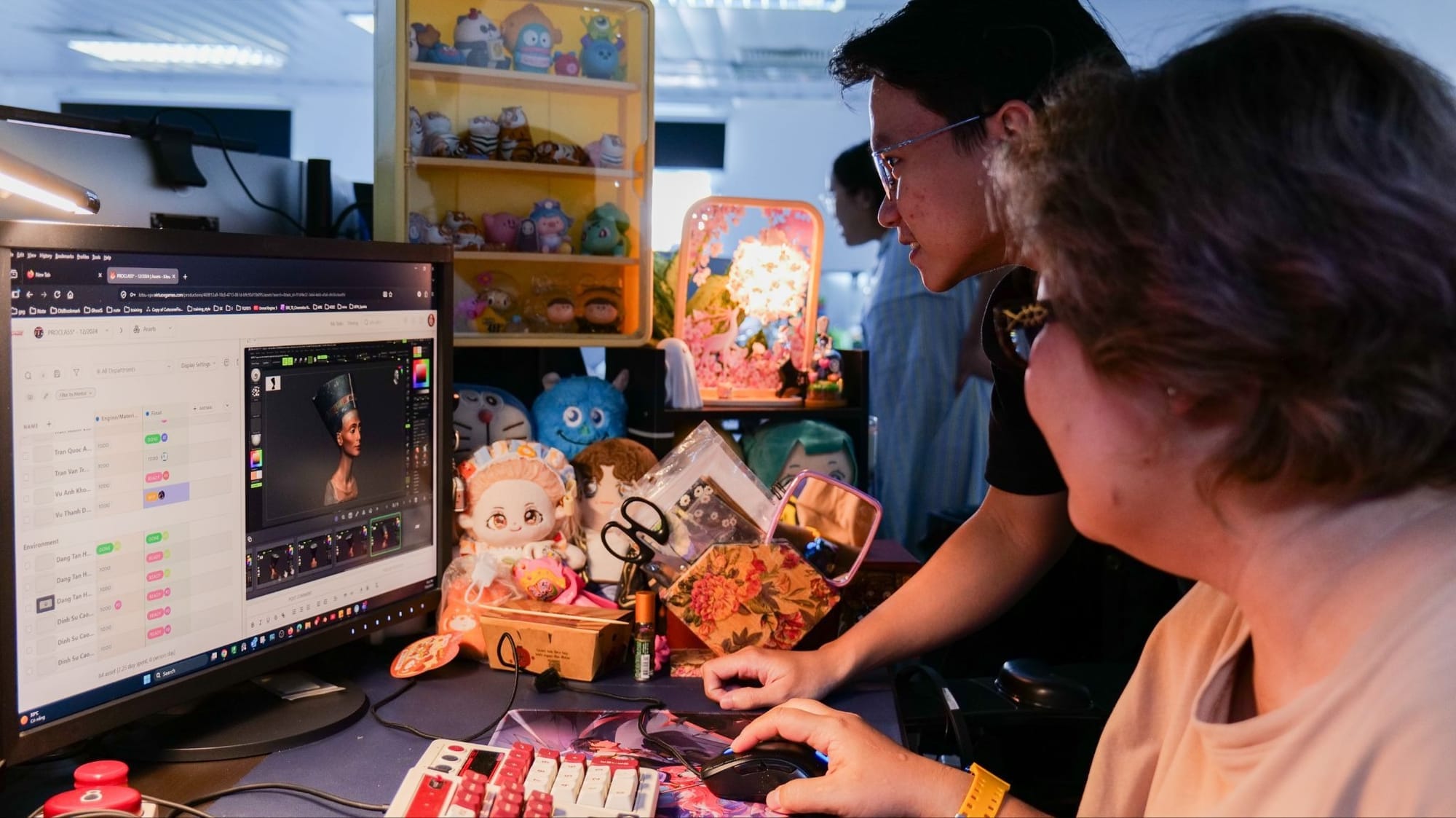
How "Remembers Studio" Used Kitsu to Scale Up Production on Arco
Discover how Remembers used Kitsu to scale production on Arco. Learn how a small studio transitioned from Google Sheets to a structured pipeline without developers.
25 articles

Discover how Remembers used Kitsu to scale production on Arco. Learn how a small studio transitioned from Google Sheets to a structured pipeline without developers.
Learn how to use Blender’s Python API to listen to events and automate workflows. This guide covers handlers and modal operators with practical examples for production pipelines.
Learn how to integrate Kitsu with Telegram by building a bot that listens to production events and sends notifications. This guide explains how to connect Kitsu events, trigger messages, and create simple chat commands for production workflows.
Learn how animation studios estimate rendering costs and predict farm capacity. This guide explains the factors that affect render time, the core cost formula, and a practical framework for reliable render estimations.
Learn what retopology is and why it’s essential for animation. This guide walks through the retopology workflow in Blender, from automated remeshing to manual topology cleanup for production-ready 3D models.
Learn how to scale an animation studio from a small team to a full production environment. Discover best practices for team structure, asset management, production tracking, review workflows, and pipeline infrastructure.
Learn how to use the Kitsu Event API and webhooks to build reactive animation pipelines. Trigger automation instantly on asset creation, task updates, and publishes without polling or manual hand-offs.
Learn how to automate Kitsu production onboarding using CSV files and the Gazu Python API. Import artists, assets, and tasks in bulk to eliminate manual setup and create repeatable, scalable studio pipelines.
Learn how to run Blender Flamenco without a NAS by using Kitsu as asynchronous storage. This guide explains custom Flamenco job types that fetch assets from Kitsu, render locally, and upload results back automatically.
Get the latest articles delivered to your inbox.
Learn how to use the Gazu Python SDK to extract production data from Kitsu and generate custom, branded PDF reports. Automate progress tracking, task summaries, and stakeholder updates without manual copy-paste work.
Learn how to create, export, and share Kitsu playlists using Python. This guide shows how to extract playlist data, download previews into a clean folder structure, and package everything for offline or client-friendly reviews.
Learn how to build a self-hosted Blender render farm using Flamenco. This guide walks through setup, shared storage, workers, and scaling strategies to help artists render faster using the hardware they already own.
Learn how to package Kitsu workflows into a standalone command-line tool using Python, Gazu, and PyInstaller. This guide covers CLI design, interactive prompts, and compiling a single executable for reliable deployment across studios and render farms.
Learn how Blender shaders really work, from node-based materials to procedural shading and Python-driven automation. This guide breaks down shader concepts, node types, and scripting techniques to help artists build flexible, production-ready materials.
Learn how to automate animation and video rendering in Blender using Python. This tutorial covers scene setup, 3D text generation, keyframe animation, and programmatic rendering to build repeatable, script-driven workflows.
Learn how to build a Blender addon that connects to Kitsu to manage asset revisions. This tutorial covers creating, browsing, and loading file versions directly from Blender, keeping production files traceable and in sync with studio workflows.
Learn how to generate low-resolution animation previews in Blender and automatically upload them to Kitsu. This tutorial covers Blender render settings, Python automation, FFmpeg processing, and preview publishing to streamline animation reviews.
Learn how to automate Blender scene creation using Kitsu breakdown data and Python scripting. This guide walks through retrieving breakdowns via Gazu, downloading assets, importing GLB files, and generating a complete Blender scene ready for layout or animation.
Get the latest articles delivered to your inbox.
Turn your Blender scripts into real tools artists love using—here’s how to build clean, intuitive UI panels for your add-ons.
Learn how to script Blender Geometry Nodes using Python to automate procedural setups, generate node trees programmatically, and build reusable tools for your animation pipeline.
Blender’s Geometry Nodes let you build 3D models procedurally. Learn how they work, why they’re essential for modern animation pipelines, and how to start using them to create smarter, faster, non-destructive workflows.
FFmpeg is one of the most powerful media tools used in animation and video production — yet many artists barely scratch the surface of what it can do. Learn 10 essential FFmpeg commands for assembling renders, adding audio, overlaying logos, comparing versions, and optimizing review exports.
Discover the difference between Forward Kinematics (FK) and Inverse Kinematics (IK) in Blender. Learn how animators use these systems to bring 3D rigs to life with realistic motion, balance, and control. Includes hands-on rigging examples for beginners.
Learn how to automate Blender with Python! Discover how scripting can speed up production, eliminate repetitive work, and let you build custom tools tailored to your animation pipeline.
Learn how to build a custom Blender integration for Kitsu using Python. This guide walks you through setting up a local environment, generating previews in Blender, and uploading them to Kitsu automatically—streamlining your DCC pipeline for faster, more reliable production.