

A 12-week animation project sounds easily manageable. Enough time to rig, animate, light, and compose a short-to-mid-length production, provided you know exactly what you have to work with before the clock starts.
The problem is that most studios do not find out their delivery pace until week ten, when the gap between available hours and remaining work becomes impossible to bridge.
The consequences are well-documented: crunch that burns out senior artists, quality cuts made in the final stretch, and attrition that leaves the next project short-staffed before it even begins. These outcomes are rarely the result of bad creative decisions, and more the result of capacity planning that was too optimistic, too vague, or simply never done.
In case you ignore it, capacity planning is the process of determining how much work a studio can handle within a given timeframe to align with the demands of the production schedule.
This article lays out a practical framework for planning and managing capacity across a 12-week production: it covers how to audit what you have, how to model the workload against it, how to structure your schedule around real constraints, and how to maintain visibility throughout production so that problems surface early enough to act on. We'll also highlight how our production tracker Kitsu is a great fit to effortlessy execute on this.
Why Studio Capacity Planning Matters
Capacity planning is the process on which every scheduling, staffing, and scope decision rests, so it deserves serious attention on any project.
First, the timeline on most projecs is short enough that errors compound quickly: a one-week slip in rigging at week three delays animation by a week but also compresses the time available for every downstream department and forces supervisors to make reactive decisions under pressure.
Animation production is also highly sequential and discipline-specific. A lighting artist cannot absorb animation overflow, just like a rigger cannot step in for compositing. When a department runs over capacity, the options get narrower: animators need to work overtime, cut scope, or slip the schedule. Planning ahead reveals these constraints before they become emergencies.
Lastly, studios operate on reputation and relationships. Delivering on time and at the expected quality level is what gets a studio the next project. Crunch-driven deliveries, rushed compositing, and scope reductions that disappoint the client are avoidable problems.
The problematic now is to get started. Productions are highly complex and it can feel overwhelming to plan ahead. Fear not, however, as this article is here to provide the basics you need to take into account to get started.
1. Audit Your Current Capacity Before Committing to Timelines
The most common mistake in early production planning is committing to a delivery date before anyone has verified that the available hours can support it. The audit step exists to close that gap.
A studio's total headcount is not its production capacity. What matters is how many hours each artist in each discipline like rigging, animation, FX, and lighting, can actually allocate to production in a given week. Some artists carry overhead from other projects. Others are part-time, on contracts with hour caps, or managing junior team members alongside their own shots.
You also can't forget to account for non-production time upfront. Research and industry practice consistently show that meetings, internal reviews, onboarding, sick leave, and public holidays consume up to 25 percent of nominally available hours. A studio that plans around 40 available hours per artist per week and ignores this buffer is planning wrong.
On many short productions, a single person can own an entire discipline or wear multiple hats. If your only rigger goes on sick leave in week two, or your compositing lead is the only person who understands the pipeline, you carry more risk. Flagging these dependencies at the audit stage gives you time to cross-train, hire a backup contractor, or at minimum, make an informed decision about the risk you are accepting.
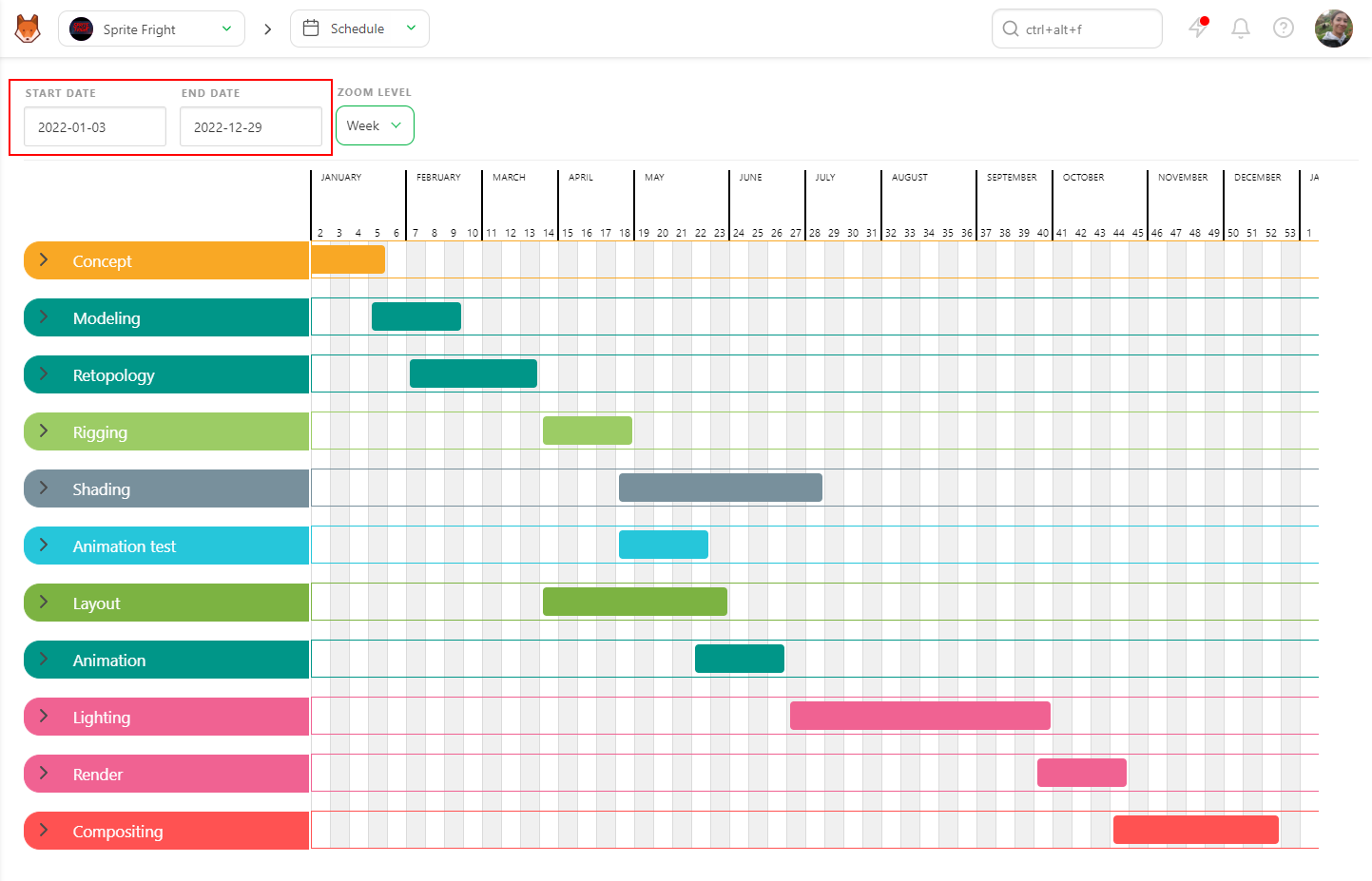
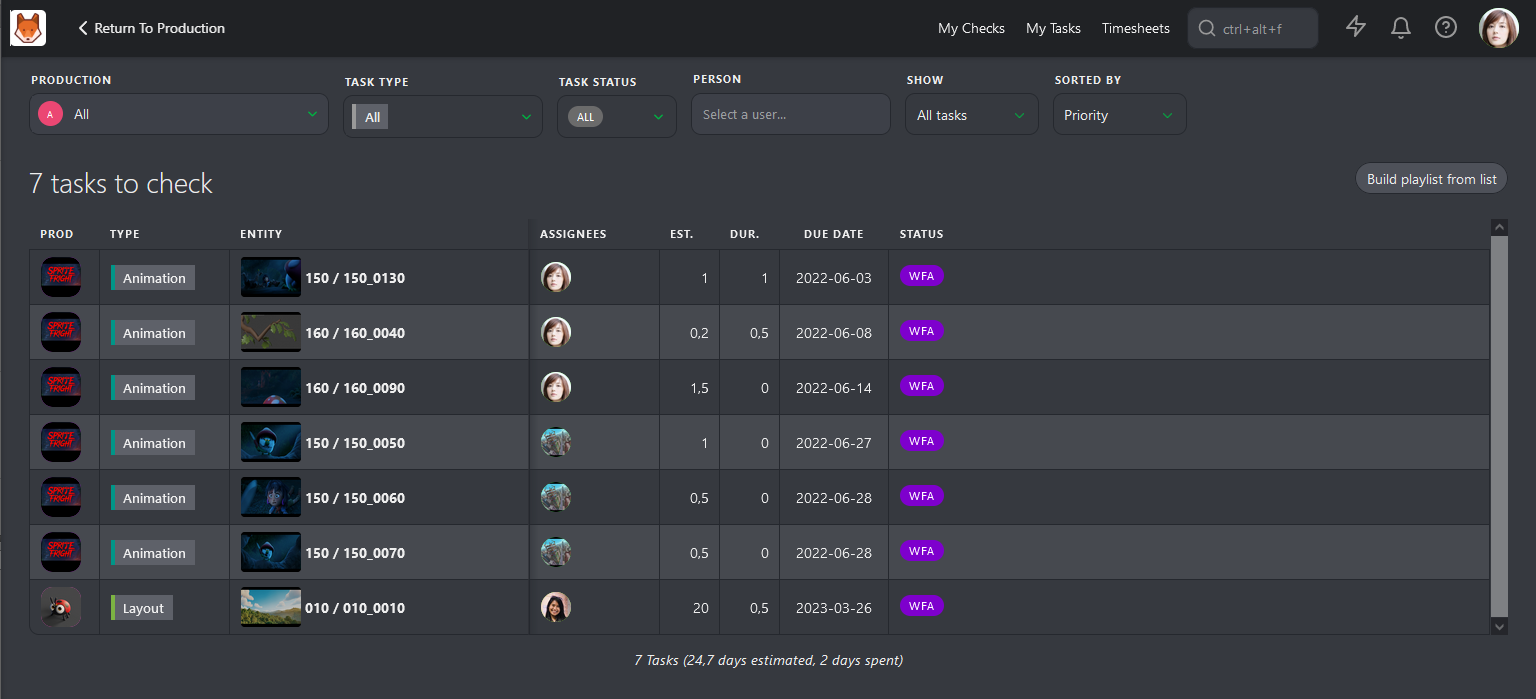
Kitsu helps studios establish a realistic view of available production capacity by combining scheduling, assignments, and timesheet tracking in one place. Producers can see how much work artists estimate they can take on but also how much work they are already carrying, how many hours are actually being logged, and which departments are nearing overload before timelines are finalized. This prevents studios from committing to schedules based on nominal headcount alone and makes it easier to account for meetings, reviews, PTO, and other non-production overhead that reduce usable capacity.
2. Break the 12-Week Workload Into Weighted Task Buckets
Once you have a good picture of the capacity you have, the next step is to quantify what the project actually requires.
First, we decompose the project into shot count, complexity tiers, and handoff dependencies. A common approach is to classify shots into hero shots, mid-complexity shots, and background shots, and to treat these as distinct workload categories. A hero shot might require twelve hours of animation work, four hours of FX, and six hours of lighting. A background shot might need two hours of animation and two hours of lighting. Once you have those unit estimates and the volume of each tier, you can calculate total department-hours estimates across the project.
Then, we compare required hours against available capacity to surface overages before scheduling begins. If your animation department has 480 available hours across 12 weeks and your shot volume requires 620 animation hours, you have a 140-hour deficit. That deficit needs a resolution: more animators, a reduced shot count, simpler complexity tiers, or an extended timeline.
Make sure to build in handoff dependencies as part of the workload model. Rigging must be approved before animation begins on a given shot, and animation must be locked before FX and lighting can finalize. These dependencies mean that not all hours are interchangeable or schedulable at will. A task bucket model that ignores sequencing will produce a capacity number that looks fine in aggregate but hides bottlenecks.
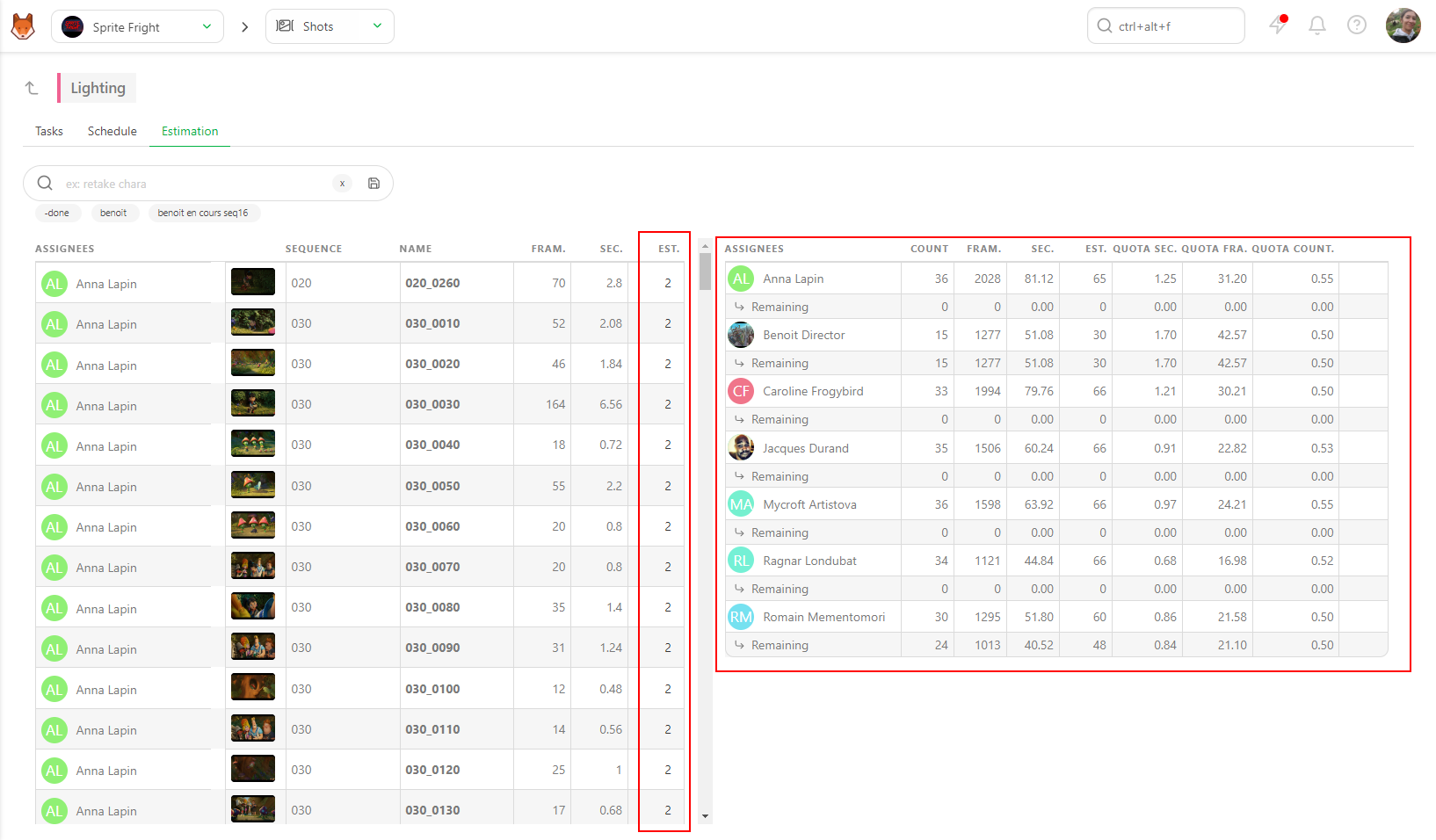
Kitsu’s shot- and task-based production structure allows studios to translate project scope directly into department workloads. By assigning estimates to shots, sequences, and task types, production teams can calculate required hours for animation, lighting, compositing, FX, and rigging before production begins. These features give supervisors and producers an early warning when projected workload exceeds available capacity and help identify bottlenecks before downstream departments begin slipping behind schedule.
3. Build a Phased Staffing Ramp, Not a Flat Headcount Model
Another persistent planning errors in animation production is treating headcount as constant across the project. A studio might have 12 artists available and assume that those 12 artists are equally useful throughout all 12 weeks. In practice, different phases of production have very different discipline demands.
Weeks 1 through 3 are typically front-loaded with rigging, layout, and blocking. This is the phase where the structural work happens: characters are built, scenes are blocked, and the pipeline is validated. Staffing these departments heavier at the start creates the foundation that every downstream department depends on. A studio that spreads rigging resources evenly across the project will find animation waiting for approved rigs in weeks five and six.
Mid-production shifts demand toward animation and FX. By weeks four through nine, the primary workload has moved downstream. Animation is in full production, FX are being developed on approved animation, and the rigging team has largely completed its contribution. Planning for this shift in advance, whether through contractor ramp-ups, internal reallocation, or scheduled handoffs, prevents the common scenario where mid-production resources are mismatched to mid-production needs.
Final weeks concentrate in lighting, compositing, and client review cycles. Weeks ten through twelve are the phase where pulling artists off their assigned shots to backfill other work does the most damage. The review-revise cycle in lighting and compositing requires uninterrupted focus. A phased staffing model that anticipated this concentration avoids the reactive reshuffling that compresses final delivery quality.
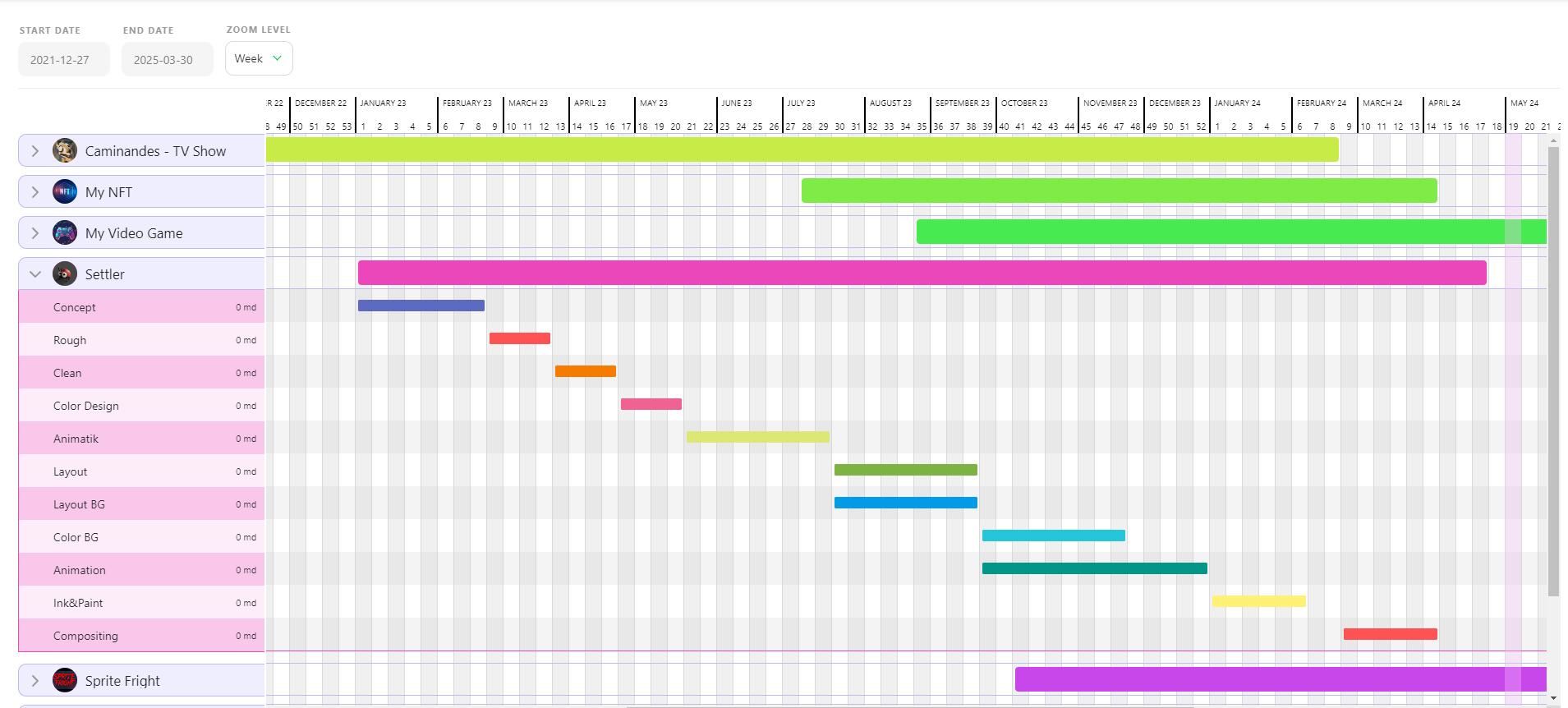
Because Kitsu tracks assignments and schedules at the department level, studios can plan staffing ramps that reflect how production demand shifts throughout the project lifecycle. Early production resources can be concentrated on rigging and layout, while later phases can prioritize animation, FX, lighting, and compositing without manually rebuilding spreadsheets each week. The tracker's flexibility allows supervisors to reallocate resources more efficiently and avoid the common problem of having artists available in the wrong departments at the wrong time.
4. Define a Hard Weekly Hour Ceiling Per Person and Enforce It
The weekly hour cap is a planning constraint that, when treated as negotiable, becomes the first step toward crunch.
A sustainable cap in the range of 40 to 44 hours per week is the planning unit. When you are building your schedule, no artist's assignment should exceed that figure. If the schedule only works by assuming 55-hour weeks, the schedule is not viable. It is a plan that depends on borrowing from your team's wellbeing, and that debt accrues with interest.
Track actual time spent weekly against estimates. A single department running 10 percent or more over its estimated hours for two consecutive weeks is an early crunch signal. At the individual level, consistent overruns mean that person is carrying more than was planned. At the department level, it means the original estimates were wrong and the schedule needs to be recalibrated before the overrun accumulates.
Crunch begins as a scheduling problem that goes unreported. A lead who notices that their department is slipping but feels unable to surface it without penalty will absorb the overrun quietly until it becomes visible to everyone. The planning culture needs to make early escalation the expected behavior rather than a sign of underperformance.
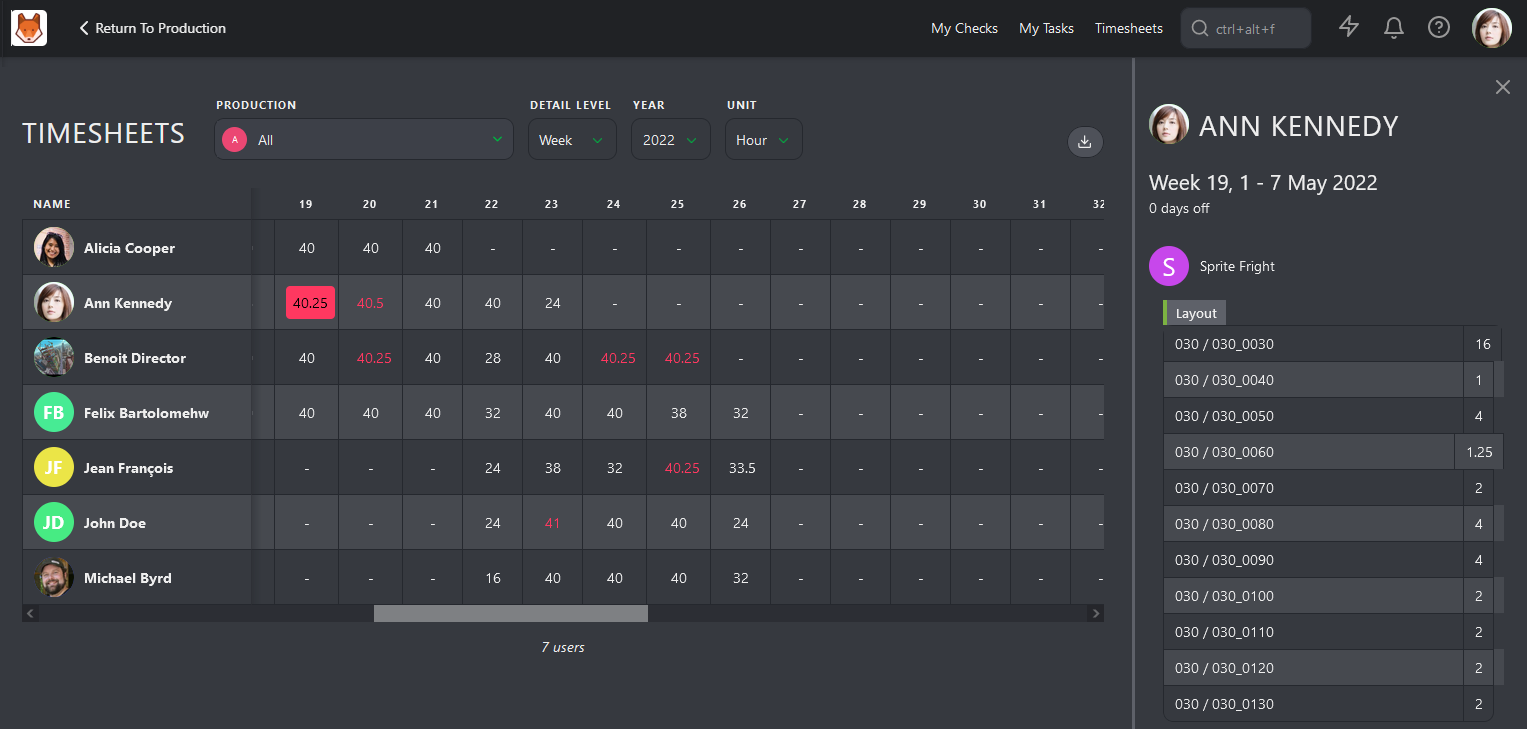
Kitsu’s timesheet tracking and quota monitoring make it easier for studios to enforce sustainable workloads and identify overutilization before it becomes crunch. Supervisors can compare estimated hours against actual logged time across both individuals and departments to help teams spot recurring overruns early enough to adjust schedules or staffing. Studios need to create a healthier production environment where schedules are built around realistic capacity limits rather than relying on unpaid overtime to close delivery gaps.
5. Maintain a Contingency Buffer of 15 to 20 Percent on Your Total Capacity Pool
On a 12-week project, expect to budget for scope changes following director revisions, client feedback, technical reshoots, and unexpected complexity.
Reserve a portion of artist hours, 15 to 20 percent for example, as unallocated risk margins. If your total available capacity is 2,000 artist-hours across the project, that means keeping 300 to 400 hours uncommitted at the start. It's the operational shock absorber that allows the production to handle changes without immediately cascading into overtime.
Rather than overloading staff when scope increases, a studio can pre-identify a short list of contractors by discipline who can be brought on quickly if the buffer is insufficient, to keep the core team within their hour ceilings while giving the production access to additional capacity when needed.
The contingency buffer must remain visible to stakeholders, because stakeholders who do not see the buffer do not understand its function so it tends to get quietly consumed by scope additions that each seem small in isolation. Making the buffer a visible line item in every capacity report, and reporting its remaining balance weekly, preserves its protective function. When a scope addition is proposed, it should be evaluated against remaining buffer explicitly, so the cost of the addition is tangible.
Kitsu helps studios keep contingency visible by tracking remaining workload, available hours, and actual production progress in real time. Instead of contingency existing as an abstract concept in a spreadsheet, producers can monitor how much buffer capacity remains and evaluate new requests against measurable production impact. Studios hence earn a clearer framework for handling revisions, late feedback, and unexpected complexity without immediately destabilizing the schedule or overloading the team.
6. Run a Weekly Capacity Check-In Across Department Leads
A capacity plan made at the start of production is a hypothesis. The daily or weekly check-in is the mechanism for testing that hypothesis against reality and adjusting before small deviations compound into large problems.
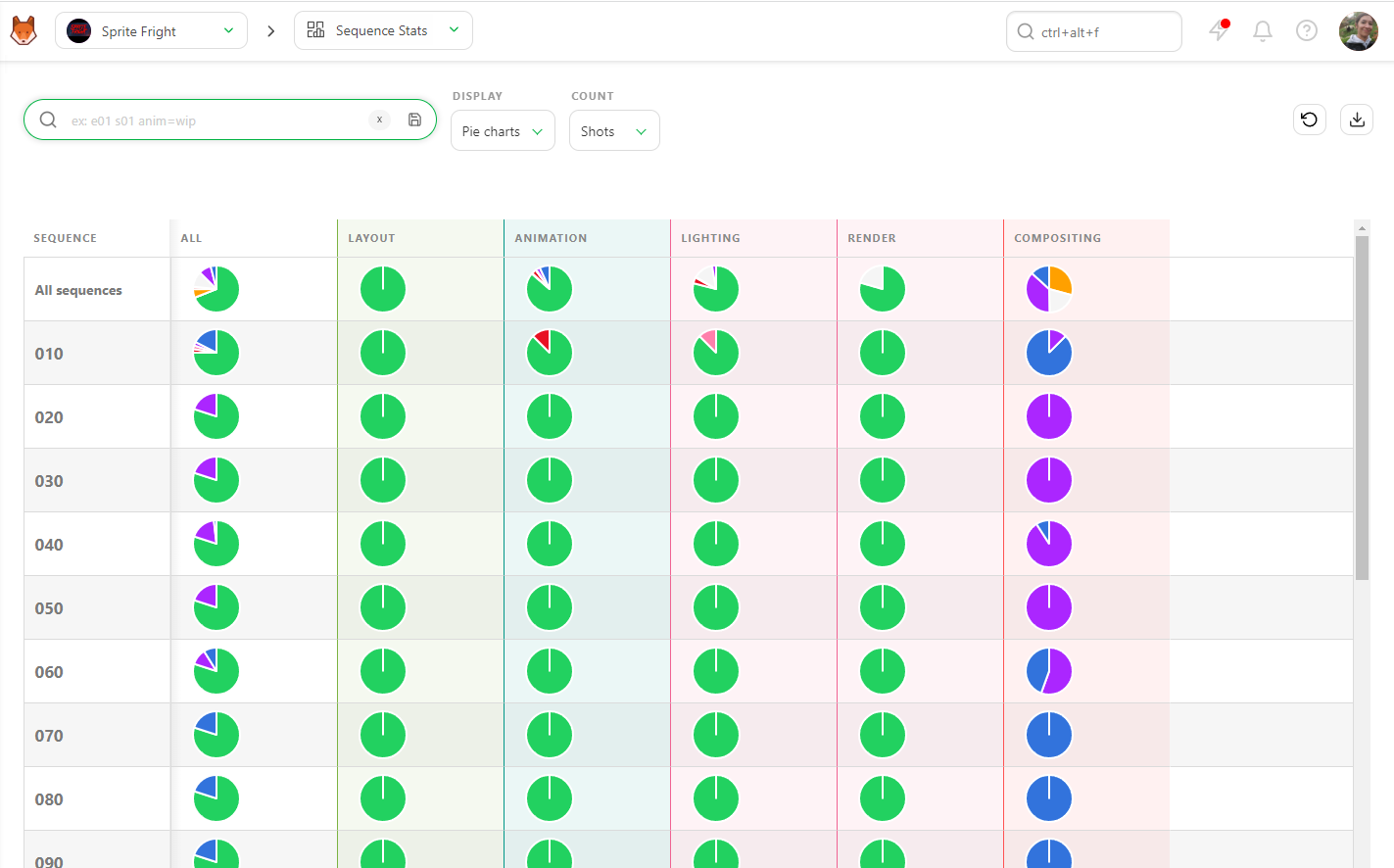
Supervisors should review shot progress against the schedule every Monday and recalibrate forecasts based on actual velocity. Original estimates are made with imperfect information: as the production progresses, you learn how long your specific shots actually take in your specific pipeline with your specific team.
Flag any shot more than one week behind as a risk item immediately. On a 12-week project, a one-week slip in a mid-production shot is a signal that the downstream departments depending on that shot need to be notified and that recovery options need to be assessed now. A two-week slip discovered in week seven, with five weeks remaining, is a crisis. A one-week slip discovered in week four has recoverable options.
Use the check-in to redistribute work proactively before a bottleneck becomes crunch. If the Monday check-in shows that animation is running behind while layout has completed ahead of schedule, the productive response is to assess whether layout artists can assist with early blocking tasks, or whether a contractor animation resource should be engaged.
The check-in artifact that supports this kind of decision is simple: a shot tracker with red, amber, and green status indicators by department, a rolling hours-remaining estimate per department, and a delta column showing the change from the previous week.
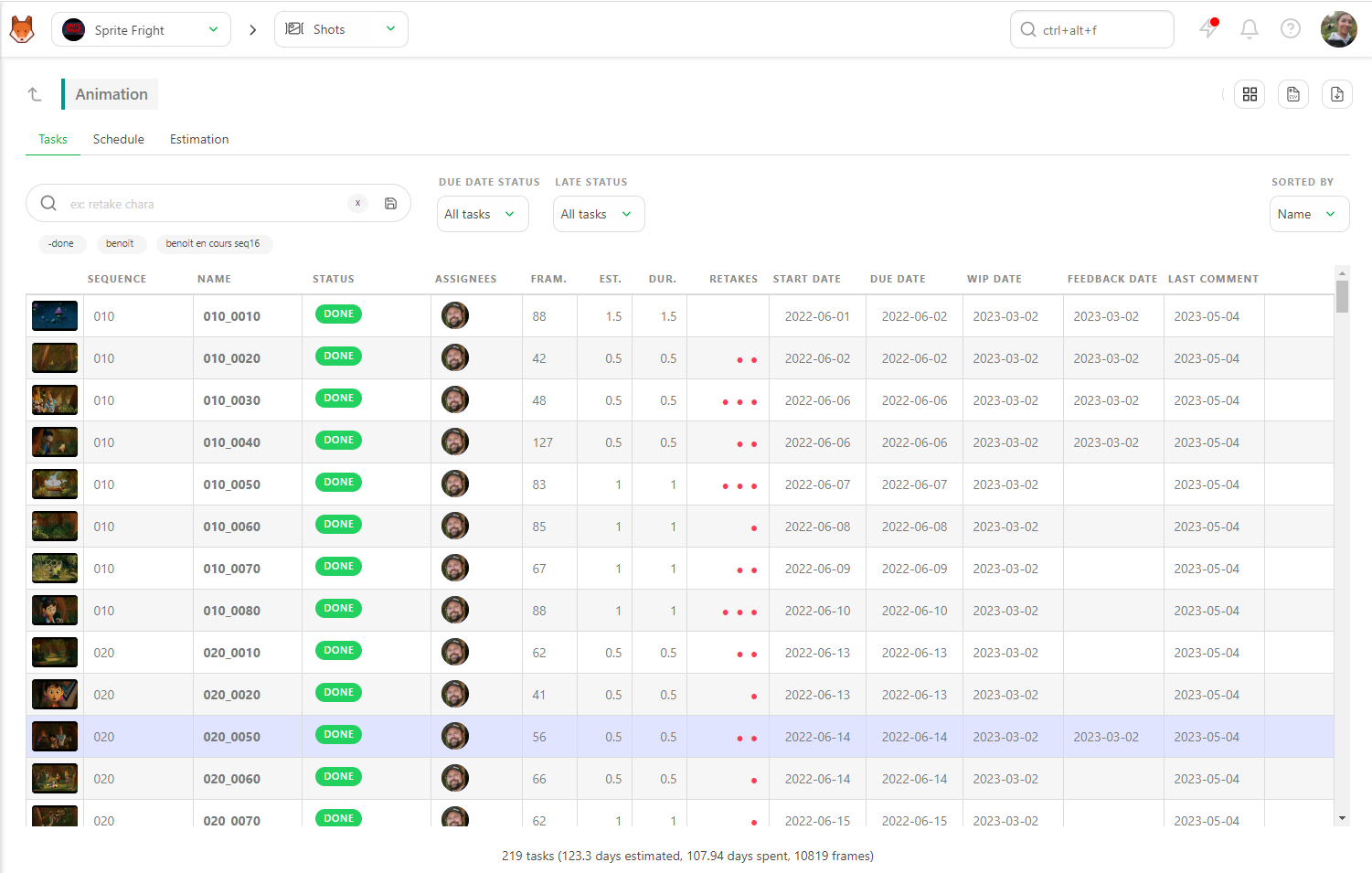
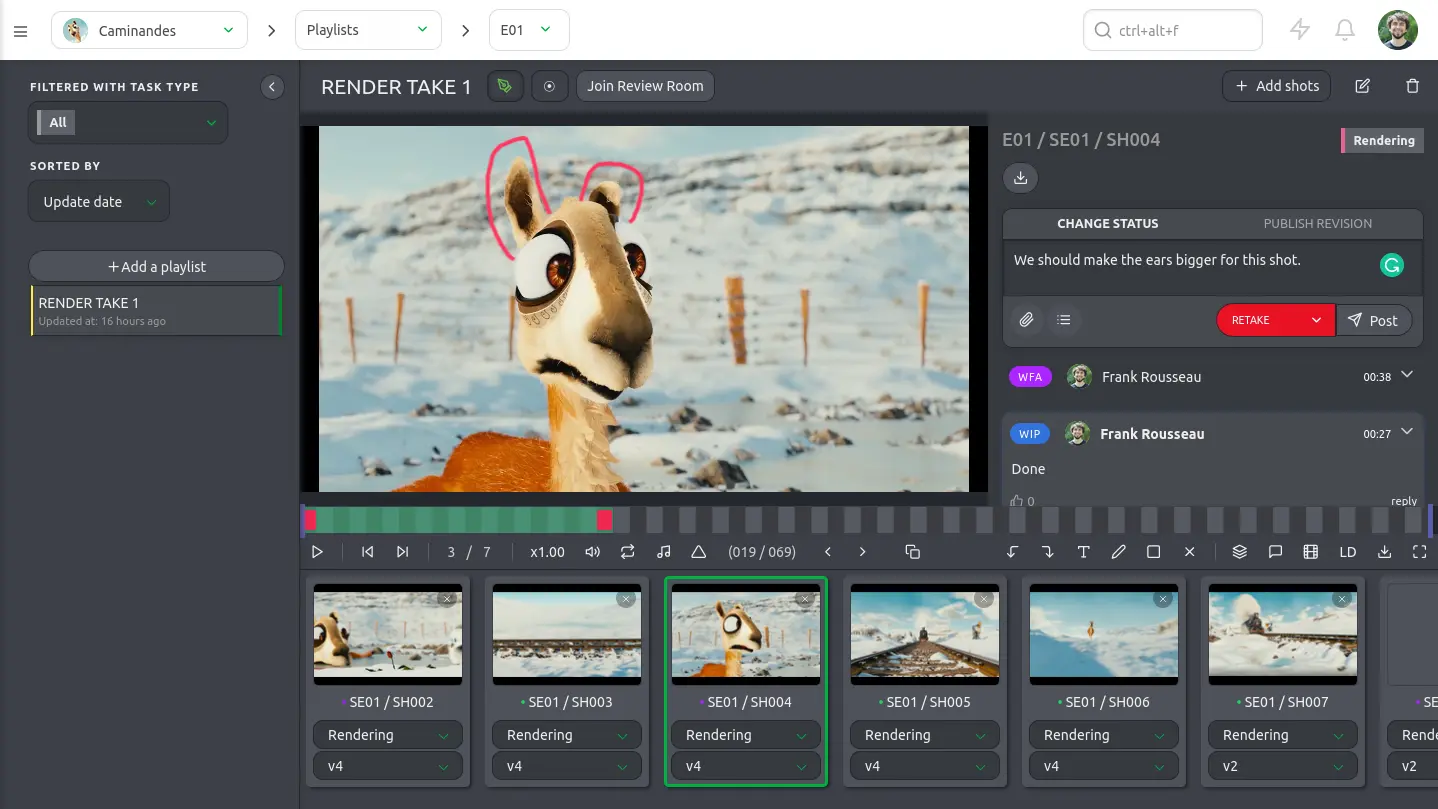
Kitsu supports weekly production reviews by giving supervisors live access to task statuses, overdue work, hours remaining, and departmental progress from a shared production dashboard. Team leads can quickly identify which shots are slipping, where estimates are inaccurate, and which departments are trending behind schedule based on actual velocity to allow teams to recalibrate production plans continuously.
7. Design Handoffs and Dependencies as Explicit Schedule Gates
Formalizing handoffs as schedule gates with hard dates turns them into trackable commitments.
Map upstream-to-downstream dependencies and assign hard date gates. For each major handoff, like rigging approval before animation begins, or animation lock before FX finalization, there should be a specific date by which the upstream deliverable must be ready. That date is a constraint that, if missed, triggers an immediate scheduling conversation.
A slipped gate in week three has compounding effects: the downstream department that was waiting for that gate to open has planned its work around a specific start date. When the gate slips, that department either starts on incomplete deliverables, idles waiting for readiness, or compresses its own timeline. None of these are free.
Build at least one buffer day between gate completion and the next department's start date. A gate that closes on Friday and hands off to animation on Monday is a gate with no tolerance for last-minute revisions or approval delays. Adding a single buffer day between gate completion and the downstream department's scheduled start absorbs the ordinary friction of sign-off processes without requiring a formal schedule change.
Kitsu makes production dependencies visible by structuring work around task traceability, approvals, and status-based handoffs. Departments can clearly see when upstream work is approved, blocked, or delayed, reducing the ambiguity that often causes downstream teams to idle or work from incomplete assets. By turning handoffs into trackable production states, Kitsu helps studios catch dependency failures earlier and coordinate schedule adjustments before delays cascade across the entire pipeline. Assets can also be linked together as dependencies to add another layer of precision to your planning.
8. Scope Lock Is a Capacity Tool
Scope management is often framed as a creative or client-relations problem but it's also a capacity problem. Treating it as one changes how and when scope decisions get made.
Every scope addition after week four should trigger a formal capacity impact assessment before approval. Adding a shot, increasing the complexity tier of an existing shot, or extending the duration of a sequence each has a measurable cost in artist-hours.
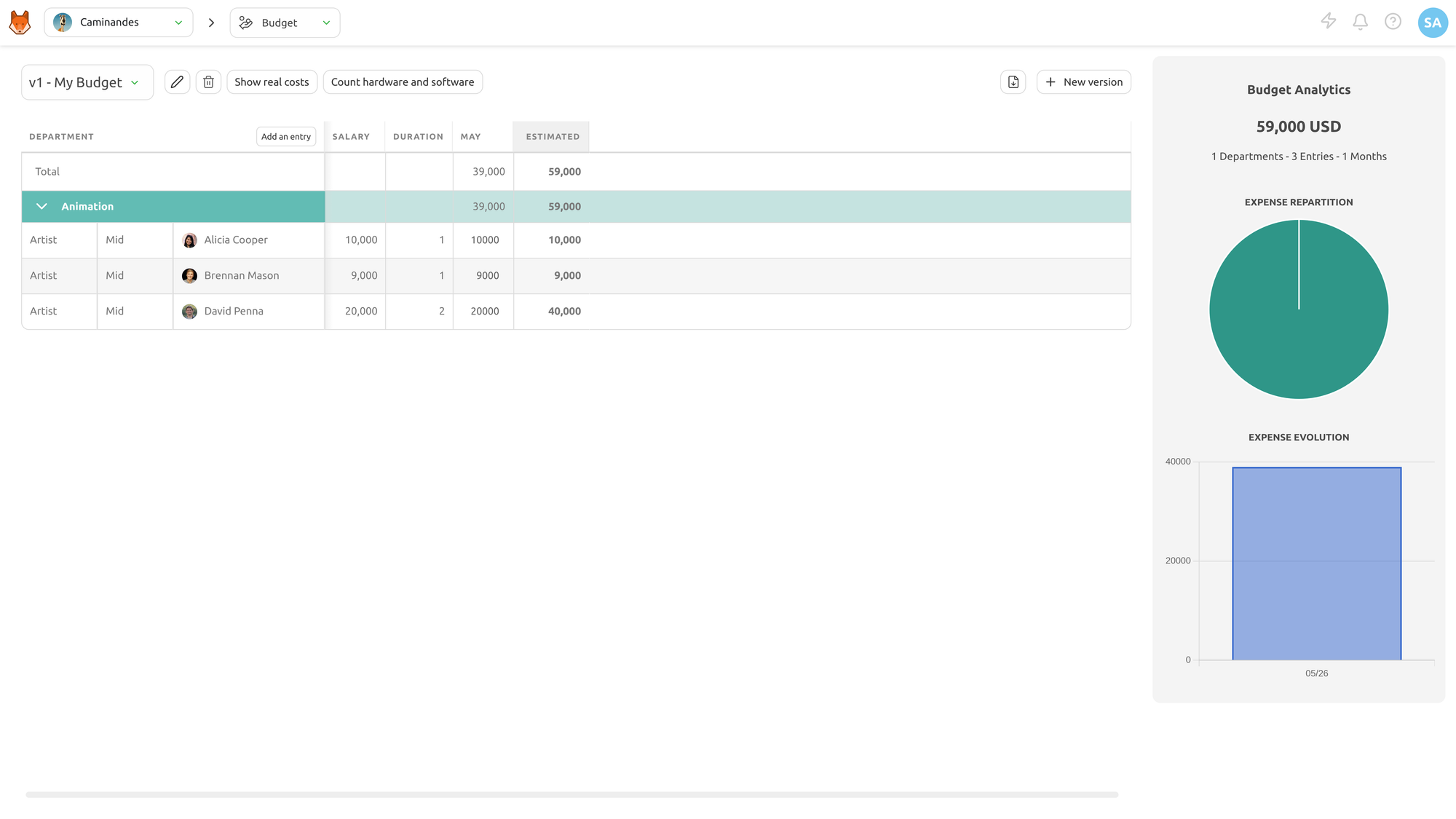
It's important to give producers a visible scope budget tied to remaining contingency hours. When the contingency buffer is expressed in hours and tied directly to scope decisions, the cost of additions becomes concrete. A producer who can see that a requested shot addition will consume 80 of the remaining 120 contingency hours understands the decision they are making. Without that visibility, scope additions feel low-cost.
Communicate clearly to stakeholders that scope changes in the back half of production directly cause crunch or quality reduction. This connection is not always intuitive to clients or executives who are not embedded in production. A studio that makes the relationship between late scope changes and delivery risk explicit, in writing and early in the project, is better positioned to hold that line when the requests come.
Saying no to scope, or surfacing the real cost of a scope addition, also has a team culture dimension. Artists need to see that their capacity is being protected, not routinely sacrificed to client requests. The trust compounds over time and affects whether senior talent stays on future projects.
Kitsu gives producers measurable visibility into the operational cost of scope changes by tying new work directly to budget forecasts, assignments, estimates, schedules, and remaining capacity. When additional shots or revisions are requested, studios can immediately evaluate how those changes affect artist workload, department timelines, and contingency reserves. These tools make scope discussions more transparent for both clients and internal stakeholders while helping protect teams from late-stage workload spikes that typically lead to crunch or quality compromises.
9. Remote and Distributed Team Considerations
If your production team spans multiple timezones, the 25 percent non-production overhead figure described in the audit section understates the actual reduction in effective hours. Timezone overlap directly affects how many hours per day your team can collaborate synchronously.
A studio with artists in three timezones separated by six or more hours may have a synchronous overlap window of two to four hours per day. Review cycles, feedback sessions, and approvals that depend on synchronous communication all get compressed into that window. Outside of it, artists are blocked waiting for responses or making decisions without full information.
The practical planning adjustment is to add a timezone friction factor on top of standard overhead estimates for distributed teams, and to design asynchronous workflows deliberately so that artists in different regions can make meaningful progress without requiring real-time contact. Daily written status updates, pre-recorded review notes, and asynchronous approval tracks are capacity tools for distributed teams.
For remote teams or cross-studio collaborations, Kitsu reduces coordination overhead by centralizing reviews, comments, approvals, and task history in a shared production environment. Artists working across multiple timezones can access feedback asynchronously, track status updates without meetings, and maintain visibility into dependencies without relying entirely on real-time communication. Remote productions preserve momentum, reduce approval bottlenecks, and minimize the productivity loss that often comes from fragmented communication workflows.
Conclusion
A 12-week animation project can be delivered on time, within scope, and without burning out the team. The conditions that make that possible are all operational ones.
The framework described in this article rests on a few foundational principles. You plan with real numbers. You treat the schedule as a live document that updates weekly based on measured velocity. Make the cost of scope additions visible before they are approved, and enforce hour ceilings as planning constraints. You build contingency in as a planned line item, not as an assumption that the team will absorb whatever comes.
None of this is complicated. It just requires discipline, transparency, and a willingness to surface problems early rather than absorb them quietly. That's how studios deliver predictably, retain their senior artists, and earn the next project.
Having the right tool for that helps a lot too, so don't hesitate to give Kitsu the production tracker a try!