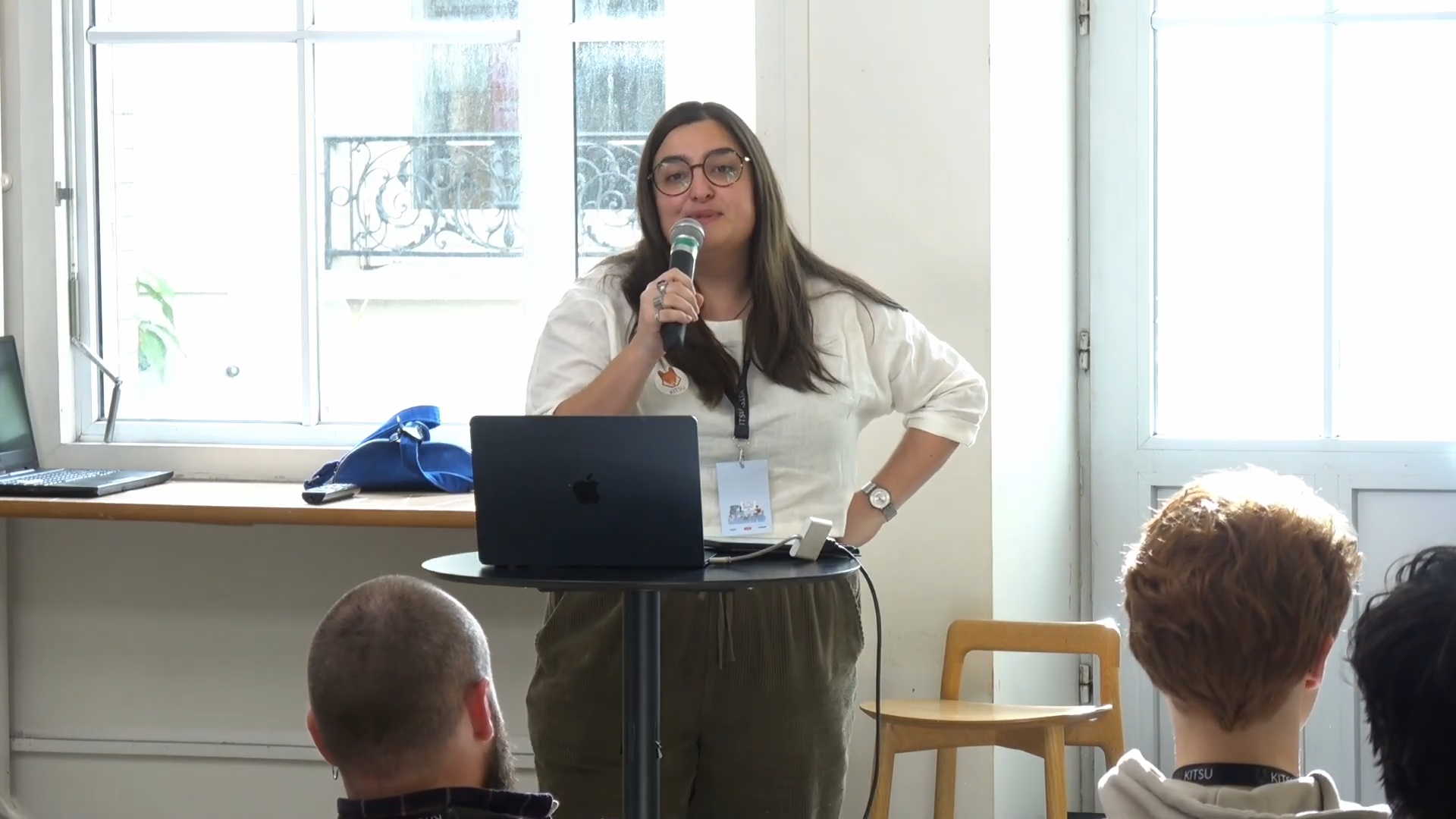
Céline Durieux has spent her career at the intersection of production direction and studio management. She started in advertising, moved into feature films and series, and for the past four years has served as Head of Studio at FOST in Paris overseeing HR, facilities across 1,140 square meters of studio space, and coordination of the tech and pipeline departments.
FOST is an independent 2D animation studio founded in 2018 by Damien Brunner and Thibaut Ruby, who also run Folivari, a French production company. FOST is the service studio arm: it handles pre-production, production, animation, and everything in between for clients ranging from French independents to Netflix. In eight years, the studio has contributed to four short films, 13 series, 7 feature films, 8 teasers, and 5 title sequences across two Parisian buildings and a third site in Angouleme.
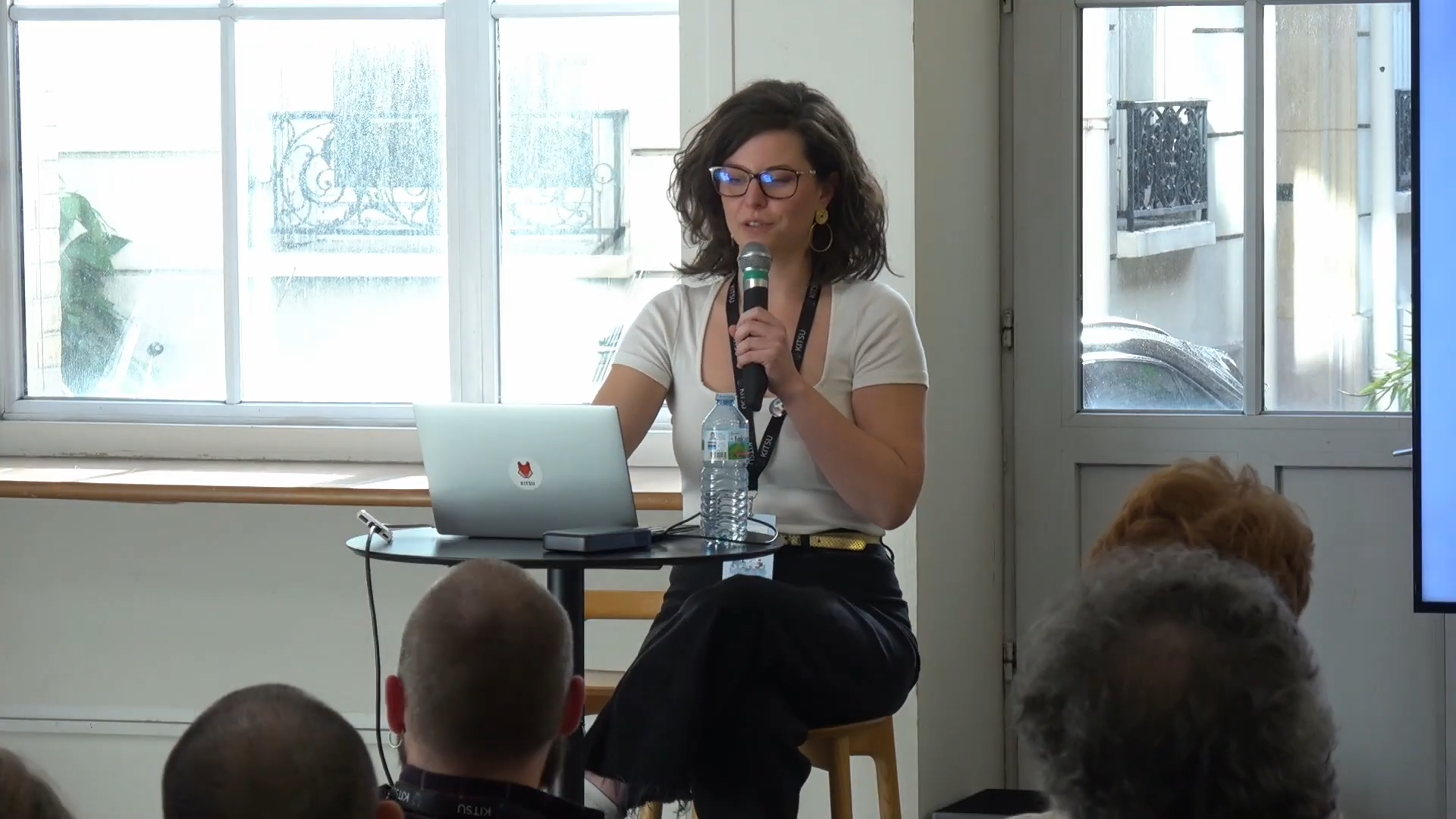

Céline shared FOST's story at the Kitsu Submit, a conference for animation studios and pipeline professionals using CGWire's Kitsu. Her talk is one of the most concrete accounts available of how a growing 2D studio adopted production tracking software, what problems it actually solved, and what it took to build the tools they needed along the way.
If your studio is still running productions off spreadsheets, this is the case study you need to read!
1. Why 2D Studios Avoided Production Trackers For So Long
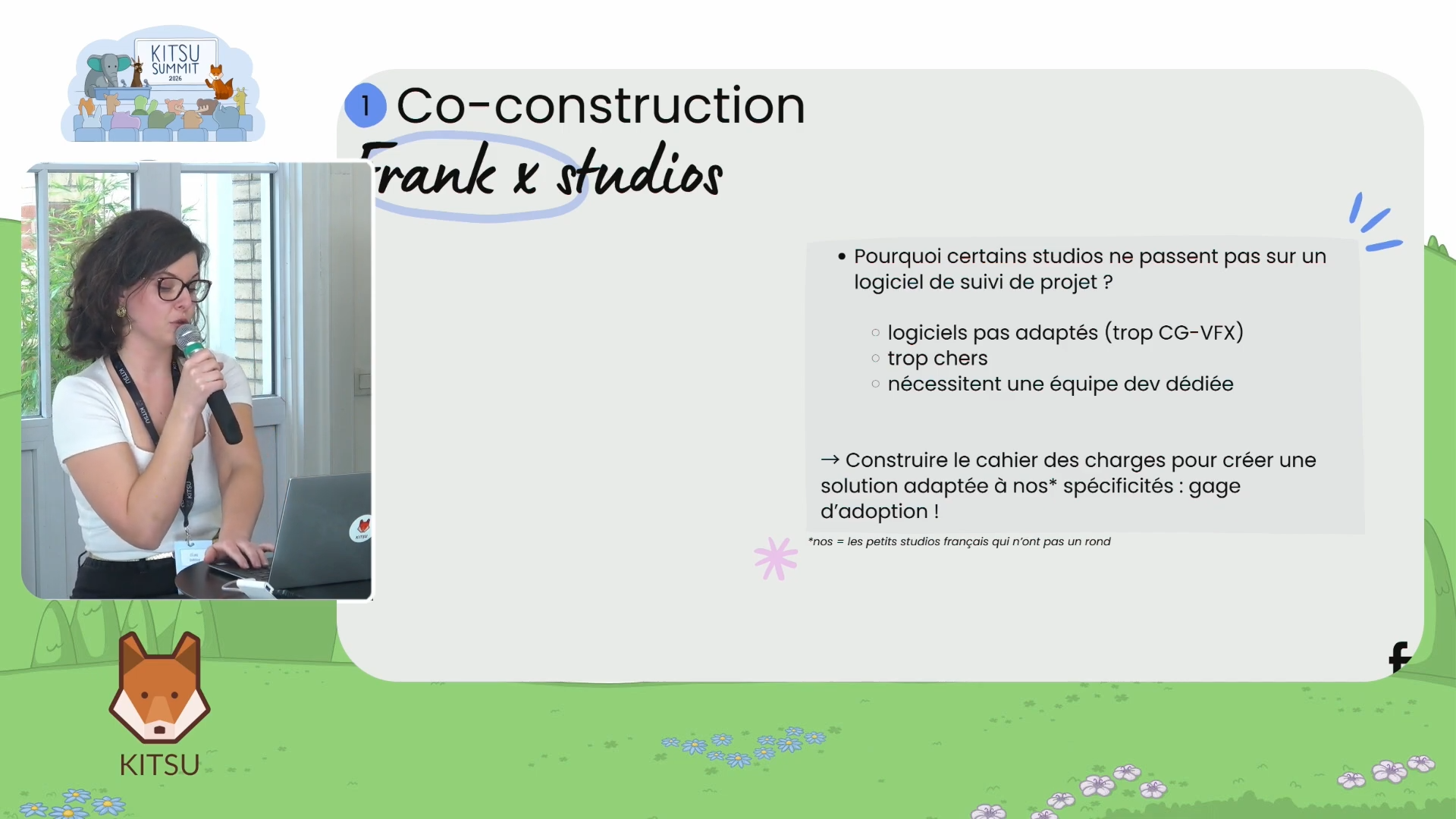
You need to understand the industry context of 2018, when CGWire founder Frank Rousseau began reaching out to studios to ask a simple question: why aren't you using a production tracker?
Céline was one of the first people he spoke to. At the time, she was Production Director at Folivari, working on the animated feature Pachamama. Three reasons came up repeatedly, and they remain familiar to many studio managers today.
First, most production trackers were built for 3D pipelines and were not adapted to 2D animation workflows. Second, they were expensive. Far beyond what independent productions could justify. Thirdly, they required a dedicated development team to set up and maintain, and studios like Folivari simply did not have that capacity.
As Céline put it: "Back in 2017-2018, we didn't have a single pipeline developer at the studio." The complexity of enterprise tools was simply incompatible with how independent studios actually operated.
This is the gap Kitsu was built to fill: an open-source production tracker designed from conversations with studios, reflecting their real constraints rather than the assumptions of large-studio software vendors.
2. The Turning Point: Remote Production on Ernest et Célestine
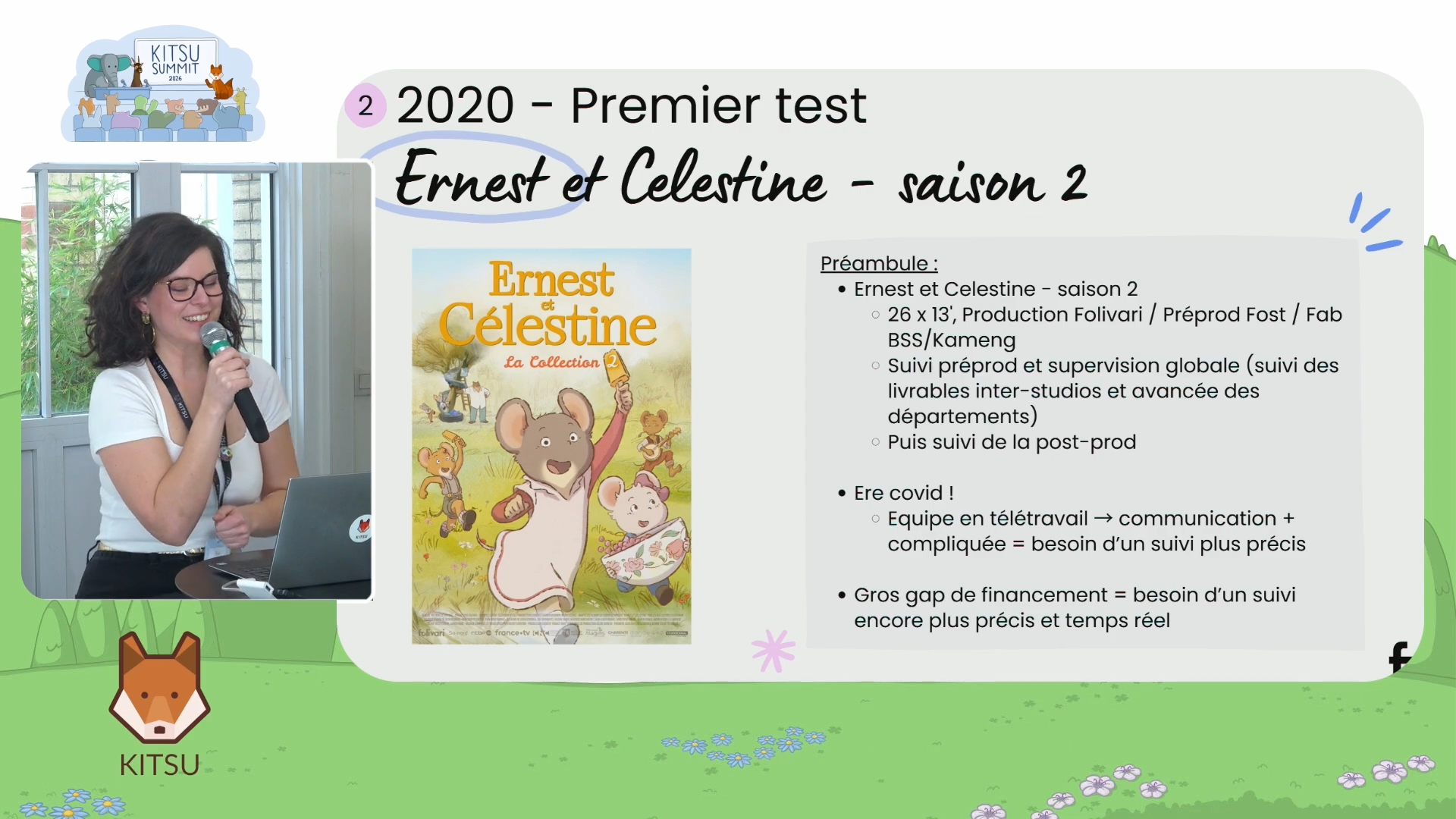
The moment that made Kitsu indispensable for Céline was not a planned technology rollout: it was a crisis.
In May 2020, she joined Folivari to serve as Production Director on the second season of Ernest et Célestine, a 26-episode series with pre-production at FOST and production split between Blue Spirit (in Angouleme and Canada) and a Chinese studio called Kameng. They launched the production in the middle of the first COVID-19 lockdown, with everyone working remotely.
Remote work created an immediate, practical problem. "You can't simply glance at a colleague's screen to see where they are," Céline explained. "Everything needs to be centralized." The production needed a way to view shots, give feedback, and track progress without anyone being physically present.
The spreadsheet approach broke down almost immediately. Breakdowns in spreadsheets are time-consuming to maintain and give a poor overview of what is happening across a production. Answering a question as basic as "which shot uses this asset, and in which episode?" was technically possible but painful. More fundamentally, teams simply do not update spreadsheets when they have other priorities, meaning production coordinators spend enormous amounts of time chasing people for status updates instead of doing higher-value work.
Remembering her earlier conversations with Frank, Céline decided to try Kitsu. It was open source, meaning there was no cost barrier to testing it. The experiment worked. "Spoiler: we never went back."
3. Studio-Wide Deployment in 2021
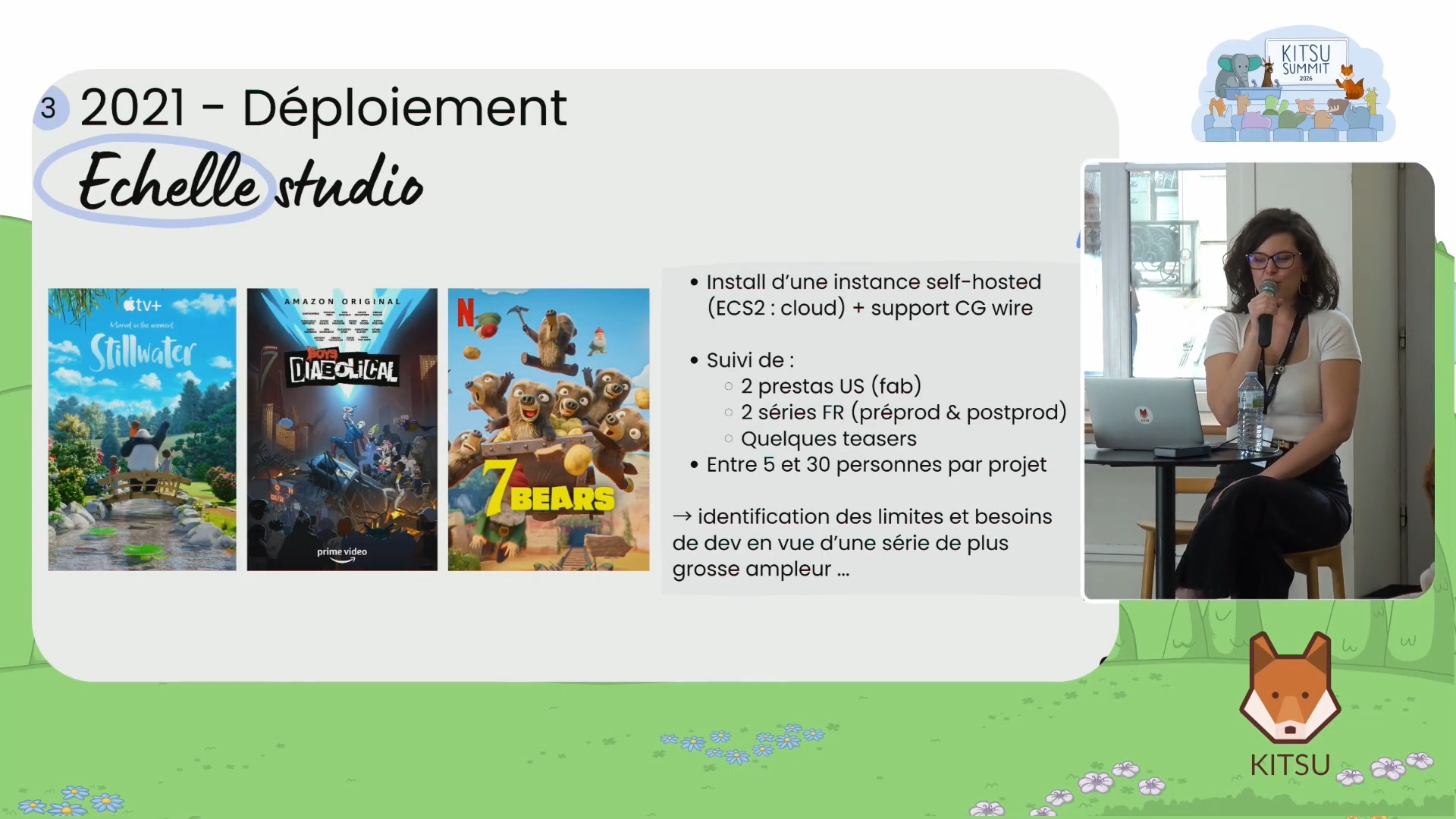
By 2021, Kitsu moved from a single-production experiment to a studio-wide tool. The timing aligned with FOST's first major growth phase. Céline, though not yet officially Head of Studio, was already involved in strategic decisions, and production tracking had become a real question.
The studio had already been forced to use ShotGrid (then called Shotgun, now called Flow) on certain co-productions where clients required it. The experience was not positive: without a dedicated IT and development team, the setup and maintenance demands of enterprise software like ShotGrid were simply not realistic.
Kitsu offered a different path. FOST deployed it across all active productions: two US co-productions handling production, two French series with pre-production at FOST and production elsewhere, and several teasers. Team sizes ranged from 5 to 30 people per project, enough to genuinely test the software's limits and identify what would need to be developed before they tackled anything larger.
4. Splinter Cell: A Change of Scale In 2023
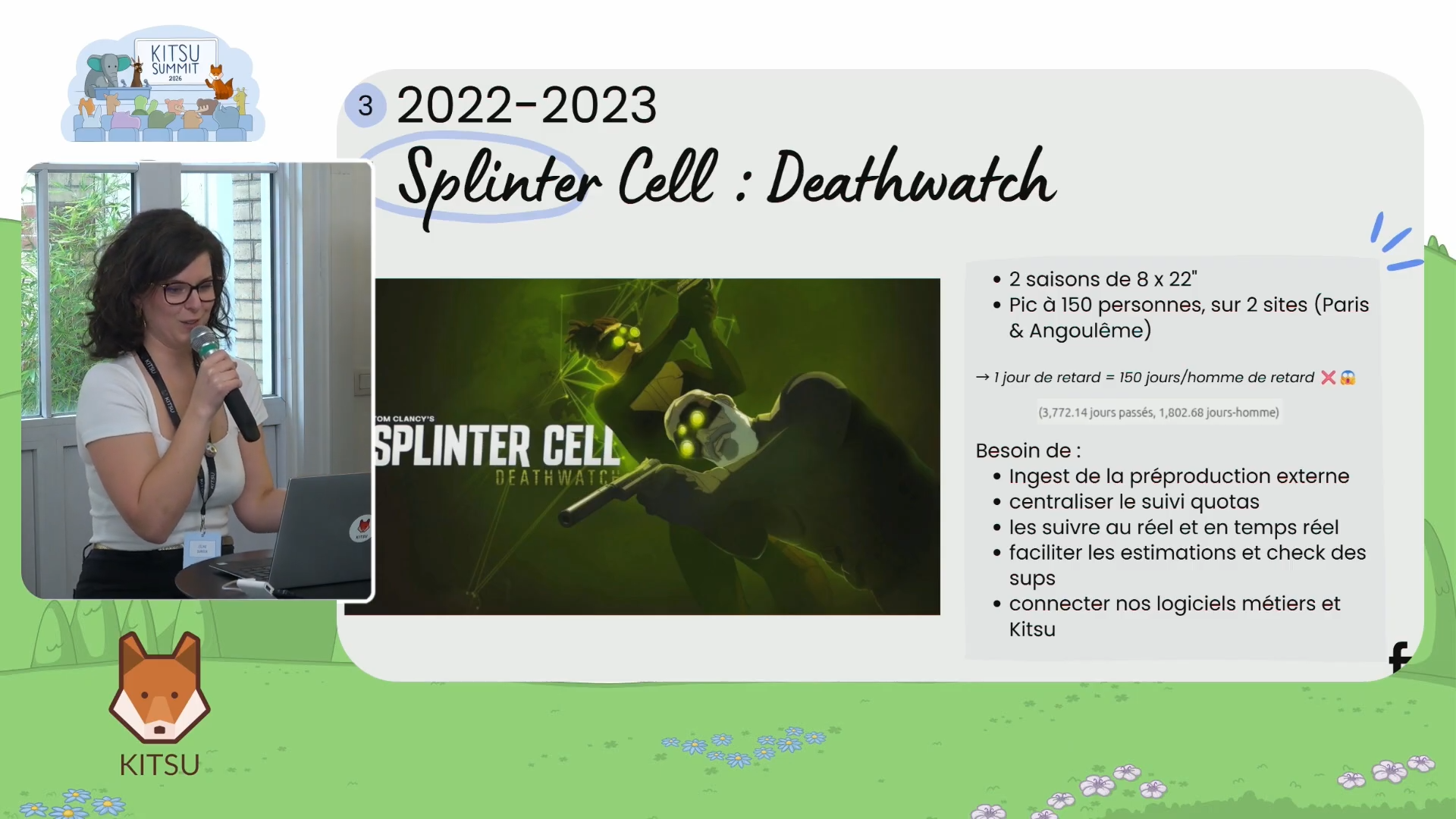
The real test came with Splinter Cell. The Netflix animated series―two seasons of eight episodes each, at 22 minutes per episode―was the largest project FOST had taken on. Before it, FOST's Paris studio had around 60 people. This single production scaled them to 150 across Paris and Angoulême.
The numbers clarify why precision matters at this scale: a one-day delay across the full production is equivalent to 150 person-days lost. There is no room for the production to drift.
Céline's team came into Splinter Cell with a clear-eyed picture of the challenges they would face, drawn from their 2021 tests. They broke them down into four specific problems.
- Importing external pre-production - The pre-production for Splinter Cell was handled by Sun Creature, a Danish studio, and was managed in ShotGrid. FOST needed to ingest that work into Kitsu without manually re-entering data.
- Centralized quota tracking - With 150 people across roughly ten departments, supervisors needed a real-time view of production progress, not a report delivered weeks after a problem had already developed.
- Supervisor tools for estimation and review - The animation department alone had 28 people. Supervisors needed to estimate shot workloads episode by episode and have a single place to review and manage their assigned shots.
- Connecting production software to Kitsu - Artists do not usually voluntarily update production tracking tools. The solution was automation: connect the pipeline software so that status updates happen without requiring manual intervention.
5. The Solutions FOST Built
What makes FOST's story particularly useful for other studios is that they did not merely adopt Kitsu; they extended it. Their small pipeline team (roughly 1.5 full-time equivalents across three people who each wore multiple hats) developed a set of tools that now form the backbone of the studio's pipeline.
Kitsunator: Importing Sun Creature's Pre-Production
To solve the data ingestion problem, FOST built Kitsunator, a tool that reads a standardized Excel lead sheet delivered by Sun Creature and automatically imports breakdowns, metadata, and layout briefs into Kitsu. Image and video assets delivered separately were automatically relinked during the import. The result: a complete pre-production in Kitsu, built without manual data entry.
The key was agreeing on a standard data format with Sun Creature upfront. This kind of inter-studio data standardization is often overlooked in pipeline conversations, but it is what makes automation possible.
Validation Page: A Supervisor Hub
At the time FOST was building for Splinter Cell, Kitsu did not have a dedicated interface for supervisors. Artists had their "My Tasks" page (a centralized view of everything assigned to them) but supervisors had no equivalent. FOST commissioned this development from CGWire directly. The result is a page that centralizes all checks for a given department in one place, giving supervisors the same clarity that artists already had.
Real-Time Quota Tracking
Quota tracking at FOST works in two stages.
At the start of each episode, supervisors estimate shot by shot how long each piece of work will take to give a total estimated production time that can be compared against the budget. Some episodes come out over estimate, but the expectation is that they will balance across the series.
During production, FOST uses timesheets to track actual time against those estimates. Every Friday, production coordinators send creative posts on the studio's internal chat encouraging artists to fill in their hours. That data flows into Kitsu, where it is extracted via API and displayed in custom spreadsheets designed to show exactly the quota views that matter.
"Early on we exported via CSV," Céline explained, "but we quickly moved to the API to extract all that data and display it in spreadsheets tailored to exactly which quotas we wanted to track and how we wanted to visualize them. The data itself comes from Kitsu; it's just a matter of display."
Automated Scene Build via Kitsu Casting
Splinter Cell was produced in Harmony, Toon Boom's animation software. Previously, scene builds (assembling all the necessary assets into a working Harmony scene) were done manually. FOST built a tool that reads Kitsu's casting data (which assets appear in which shots), pulls the relevant files from the studio server, and assembles the scene automatically. A second tool injects layout briefs stored as Kitsu metadata directly into the Harmony scene; because, as Céline noted, "if artists are in Harmony, they're not necessarily looking at Kitsu."
6. Working With CGWire During Scale-Up
Scaling a Kitsu instance to handle a production with over 8,000 shots―multiplied by tasks, versions, and history―is not trivial. FOST runs a self-hosted instance rather than using CGWire's cloud offering, which meant their IT team had to manage infrastructure directly. They ran into publishing and latency issues as server load increased.
Throughout the production, FOST maintained close contact with the CGWire team: sharing bug reports, improvement suggestions, and holding more formal check-in points three to four times a year. Importantly, Céline emphasized that when FOST gave feedback, they framed it in terms of all their productions, not just Splinter Cell, so that fixes and improvements would benefit the broader Kitsu userbase rather than solving only their specific situation.
This kind of ongoing collaboration between a studio and a software vendor is uncommon in animation production software. It reflects both the open-source nature of Kitsu and the fact that CGWire's business model depends on studios genuinely succeeding with the tool.
7. After Splinter Cell: Consolidation and New Tools
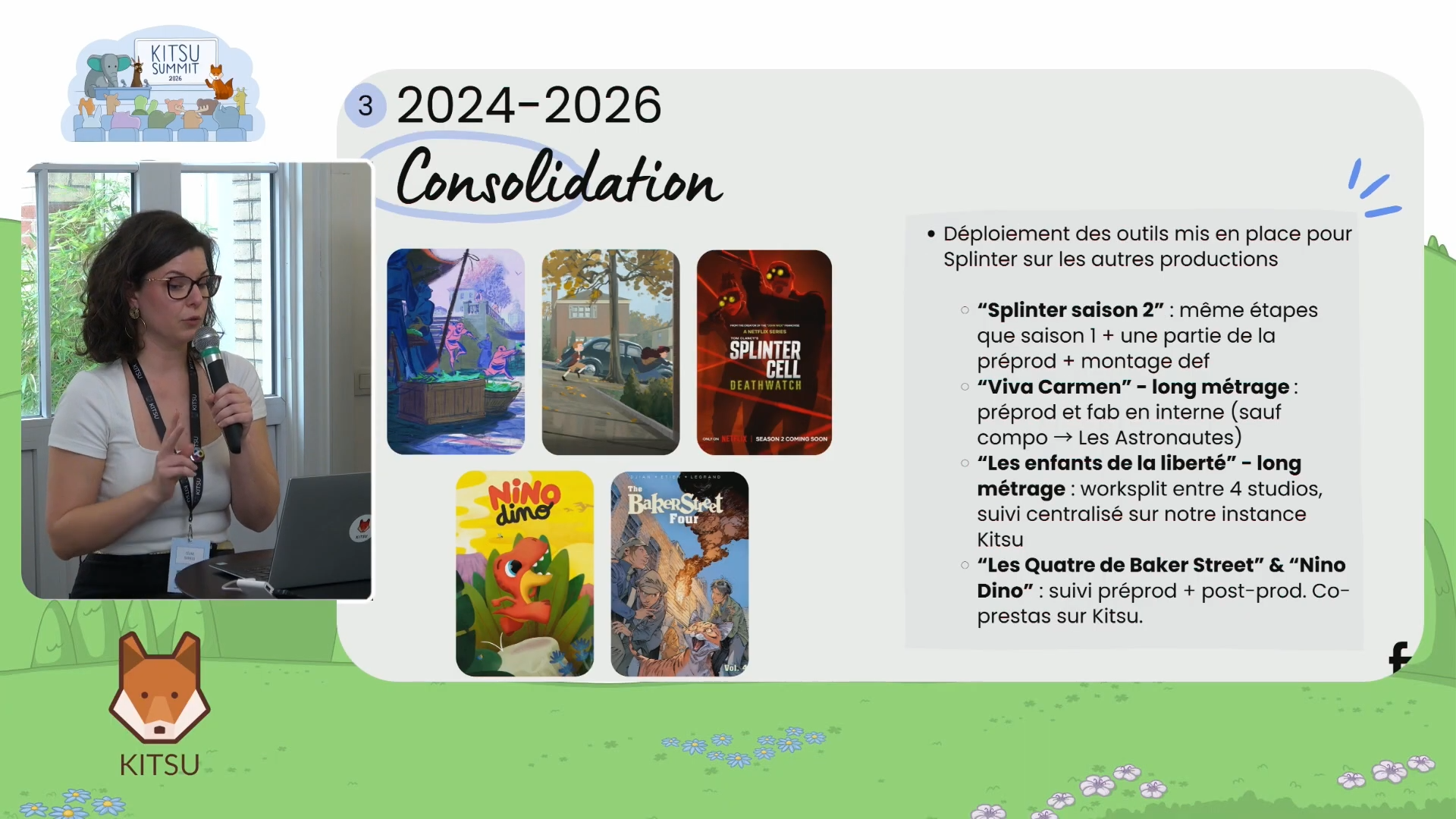
Season 1 of Splinter Cell is now on Netflix. Season 2 is in production. In parallel, FOST is running two feature films and two series at the pre-production stage.
The studio has continued building on its Kitsu foundation.
- Kitsunator gained export functionality, since FOST now does pre-production for other studios and needs to deliver structured data in formats those studios can use. The lead sheet matrix was standardized to be flexible enough to adapt to different client requirements.
- A tool called Kitsu Timeshit pulls quota data per person per task step in real-time and also tracks shot attribution: a recurring challenge on any multi-department production.
- A retroplanning tool internally called "the Elephant" (named for its size and initial slowness) is built at the start of each production with estimated quotas and updated continuously with real Kitsu data. On large co-productions, supervisors use it to run simulations: what happens to the schedule if this team requests leaves? What if this episode runs longer? It has become essential for production planning.
- FOST also built a demo reel tool for artists who want to show their shots after a project wraps. The tool reads Kitsu data and shot attributions, automatically pulls the latest version of each artist's shots, adds logos and copyright information, and packages everything into folders ready for delivery. What would otherwise be hours of manual work per artist becomes automated.
8. Kitsu as the Studio's Central Data Layer
The through-line of Céline's talk is a shift in how FOST thinks about Kitsu. It is not simply a production tracking tool but also the central data layer for the entire studio pipeline.
Shot durations, shot lists, reuse information, scene builds, layout briefs, reviews (including client reviews), timesheet data, casting information: all of it flows through or into Kitsu. The studio is continuing to develop its post-production pipeline in connection with Kitsu, particularly around changes that come back from editing: shot order changes, deleted shots, modified durations, etc.
This is the destination that a well-implemented production tracker leads to: a single source of truth that every department and every tool can read from and write to.
Key Takeaways
FOST's story is not about having a large development team or an unusual budget. Their pipeline team used to represent 1.5 full-time equivalents. Their tools were built incrementally, starting with a single remote production during a pandemic.
The progression is worth noting:
- A production crisis (remote work during COVID) forced a more disciplined approach to tracking.
- Kitsu being an open-source tool with no barriers to entry made it possible to experiment without organizational risk.
- Success on one production built internal confidence for studio-wide adoption.
- Deliberate tests on medium-scale productions identified exactly what would need to be built for the next step-up.
- Custom tools extended Kitsu's capabilities where the standard offering fell short, with improvements fed back to the vendor.
The result is a studio that scaled from 60 to 150 people on a single production and kept the ship on course.
Céline closed with a note from Angele, the pipeline artist who built several of the tools described above: "The Kitsu API and documentation are, for once, not a nightmare to navigate. That's rare enough in software to be worth saying out loud."
For studios still managing productions through spreadsheets and manual chasing, that is perhaps the most actionable thing to take away! The barrier to starting is lower than it has ever been.