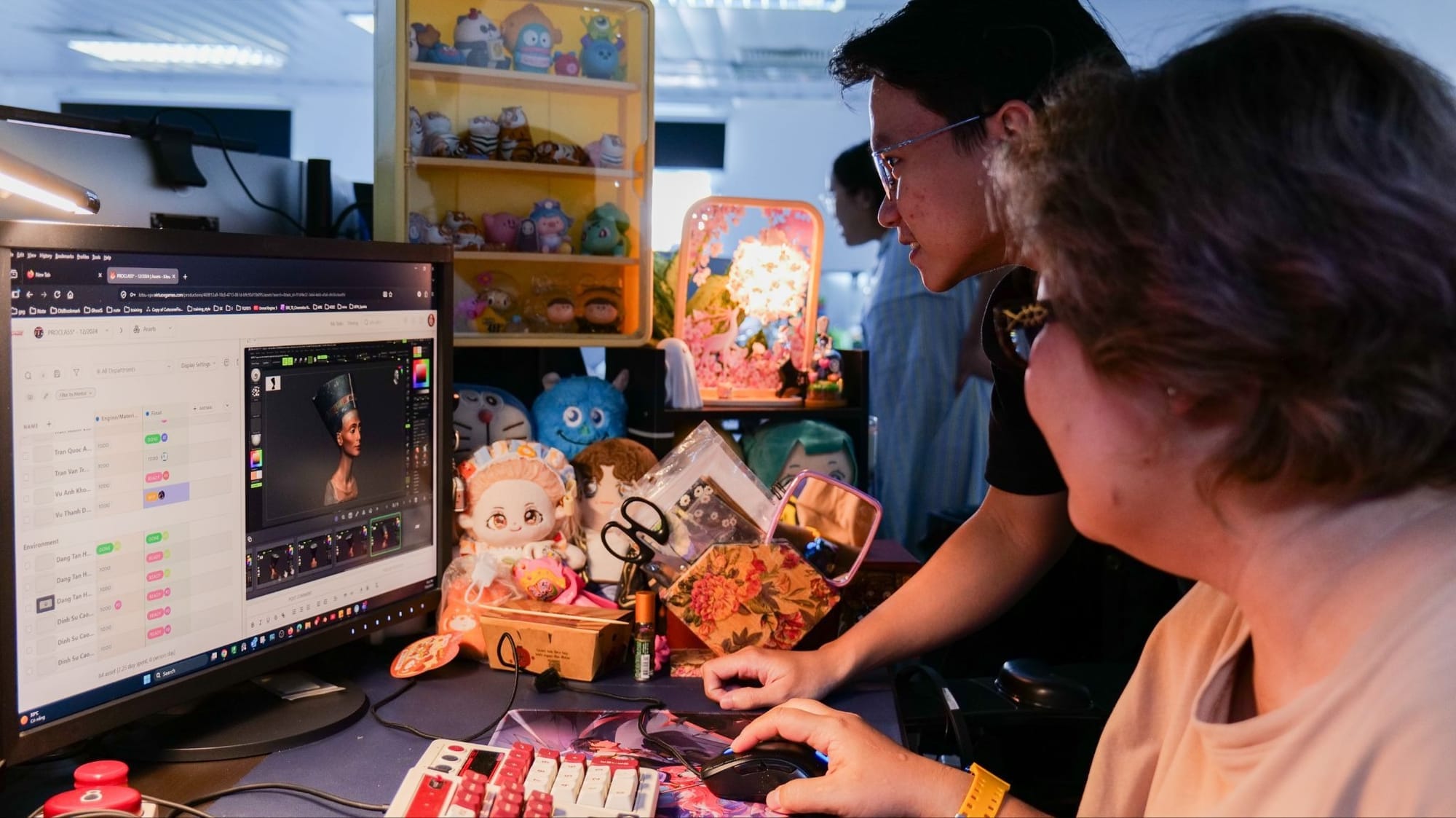
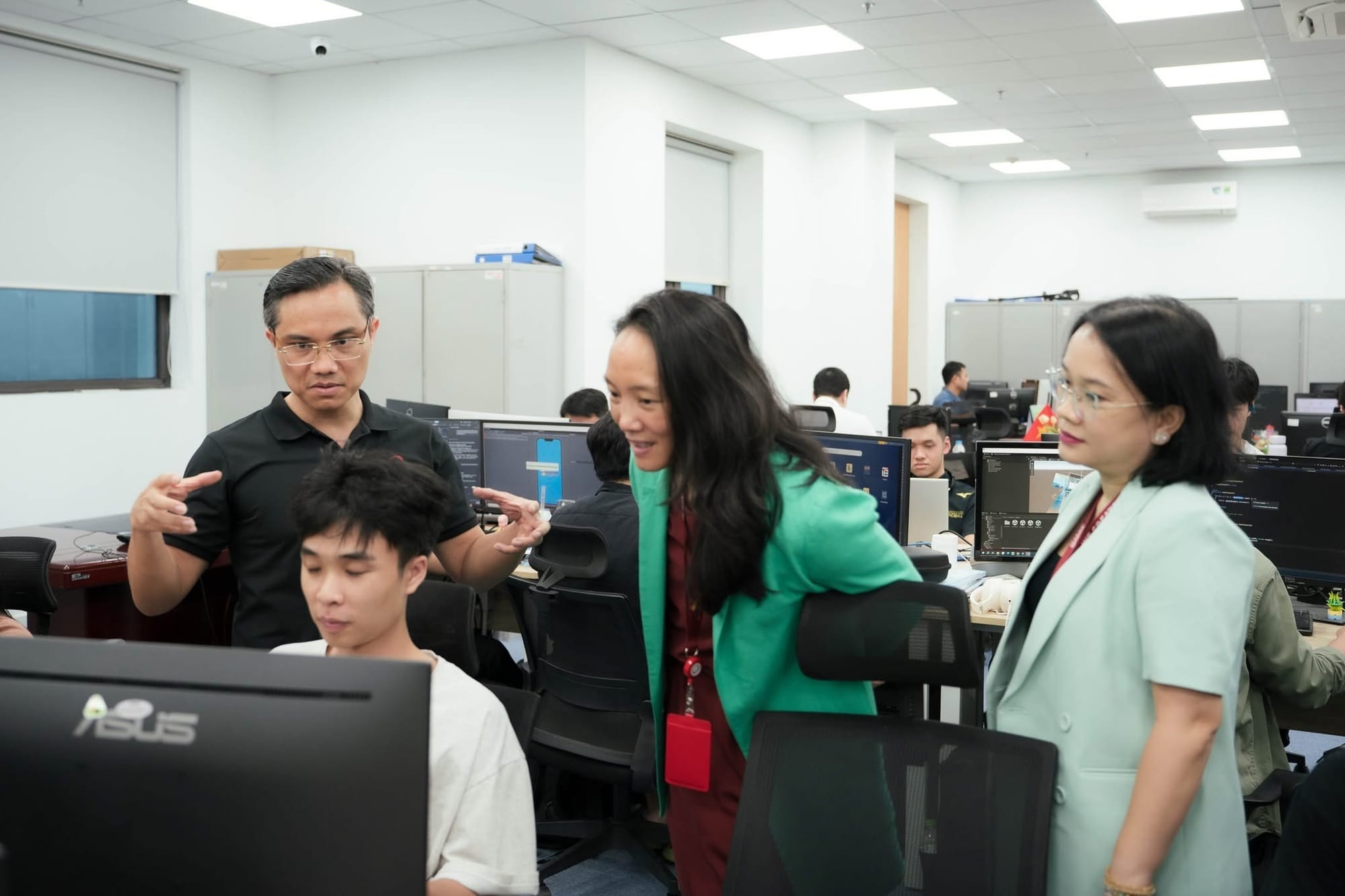
The first thing you notice when you walk into Sparx*'s headquarters in Ho Chi Minh City is the scale of it: rows of workstations stretch across open floors, artists bent over tablets and dual-monitor setups, the hum of render farms audible somewhere behind the walls.
Roughly 600 people come here every day to work on some of the biggest names in international entertainment: video games, animated films, shorts, cinematics, trailers, for some of the most technically demanding entertainment projects in the world. Everything moves through a pipeline calibrated for the standards of AAA game development. What keeps that engine running is less visible, and it starts with a question most studios eventually have to answer: What happens when your production tracking can't keep up with your production?
From the outside, a studio like Sparx* seems unassuming enough to look like the product of overnight ambition. But Sparx* is the result of decades of deliberate effort, strategic partnerships, and a long-running bet on Vietnam's creative workforce.
To understand where the studio is today, you have to understand where it came from and what it took, in terms of both people and infrastructure, to get there.
Sparx* and the Rise of Vietnam's Digital Entertainment Industry
Sparx* grew alongside Vietnam's digital content industry, making it not just a participant in that story but one of its primary authors.
The studio has been a pioneer of international animation production in Vietnam since the 1990s, a period when the country was still establishing itself as a viable destination for outsourced creative work.
At the time, the idea that a Vietnamese studio might one day lead production on a Hollywood feature film would have seemed remote. Yet that is precisely what happened in 2008, when Sparx* became the first Vietnam-based studio to take the lead animation role on a Hollywood feature, the animated comedy Igor. It was a milestone that signaled something important: Vietnam was not simply a low-cost production satellite.
The next inflection point came in 2011, when Sparx* joined Virtuos, the global game development group. That partnership accelerated the studio's transformation into a AAA-capable production environment. What had begun as primarily supporting work contributing animation to larger productions evolved into full-spectrum art production, with Sparx* teams taking on increasingly complex roles.
The credits tell the story plainly: Sparx* has contributed to League of Legends, Riot Games' enduringly popular title that demands a high-quality pipeline of character and environment art. The team worked on Demon's Souls, the FromSoftware classic reborn in painstaking detail for PlayStation 5. And they are among the contributors to METAL GEAR SOLID Δ: SNAKE EATER, the high-profile remake of Hideo Kojima's foundational stealth game; a project that carries enormous expectations from one of gaming's most dedicated fan communities.
More recently, Sparx* has expanded beyond art production into game design and programming, broadening its footprint in the development process. This move reflects a wider shift: Vietnam is a substantive player in international game production.
But scaling this kind of production that moves from cinematic trailers to full AAA game development, across hundreds of artists and dozens of concurrent projects, required infrastructure capable of keeping pace. And that meant rethinking how the studio tracked, managed, and understood its own work.
The Search for an Alternative to Traditional Production Tracking
Like many studios that grew quickly, Sparx* accumulated production habits along with its project credits.
In the earlier days, version control was a matter of folder structures. Files were named and dated by hand, stored in shared directories that required tribal knowledge to navigate. As the team grew, so did the complexity of keeping track of what had been reviewed, what had been approved, and what was still in progress.
ShotGrid, Autodesk's production tracking platform now called Flow, became the studio's primary tool for managing this complexity. It's a capable tool, widely used across the animation, VFX, and even gaming industries.
The most immediate issue was cost. Enterprise licensing for production software adds up quickly at 600 people, and those costs only increase as a studio grows. For a team with ambitions to scale further, locking into a pricing model tied to headcount creates a ceiling on what expansion is actually worth.
You also have to factor in maintenance and support costs.
The appeal of open-source production software like Kitsu is not simply that it costs less, but ownership. With an open-source tool, a studio controls its own deployment. It can run the software on its own infrastructure, modify the codebase to suit its workflows, and build integrations without waiting for a vendor to prioritize them. When something breaks, the team can fix it themselves. When a new feature is needed, they can build it.
For a studio like Sparx*, which was developing increasingly sophisticated internal tooling and wanted production tracking at the center of that ecosystem rather than adjacent to it, open source was the logical option.
That reasoning led them to Kitsu.
First Steps with Kitsu
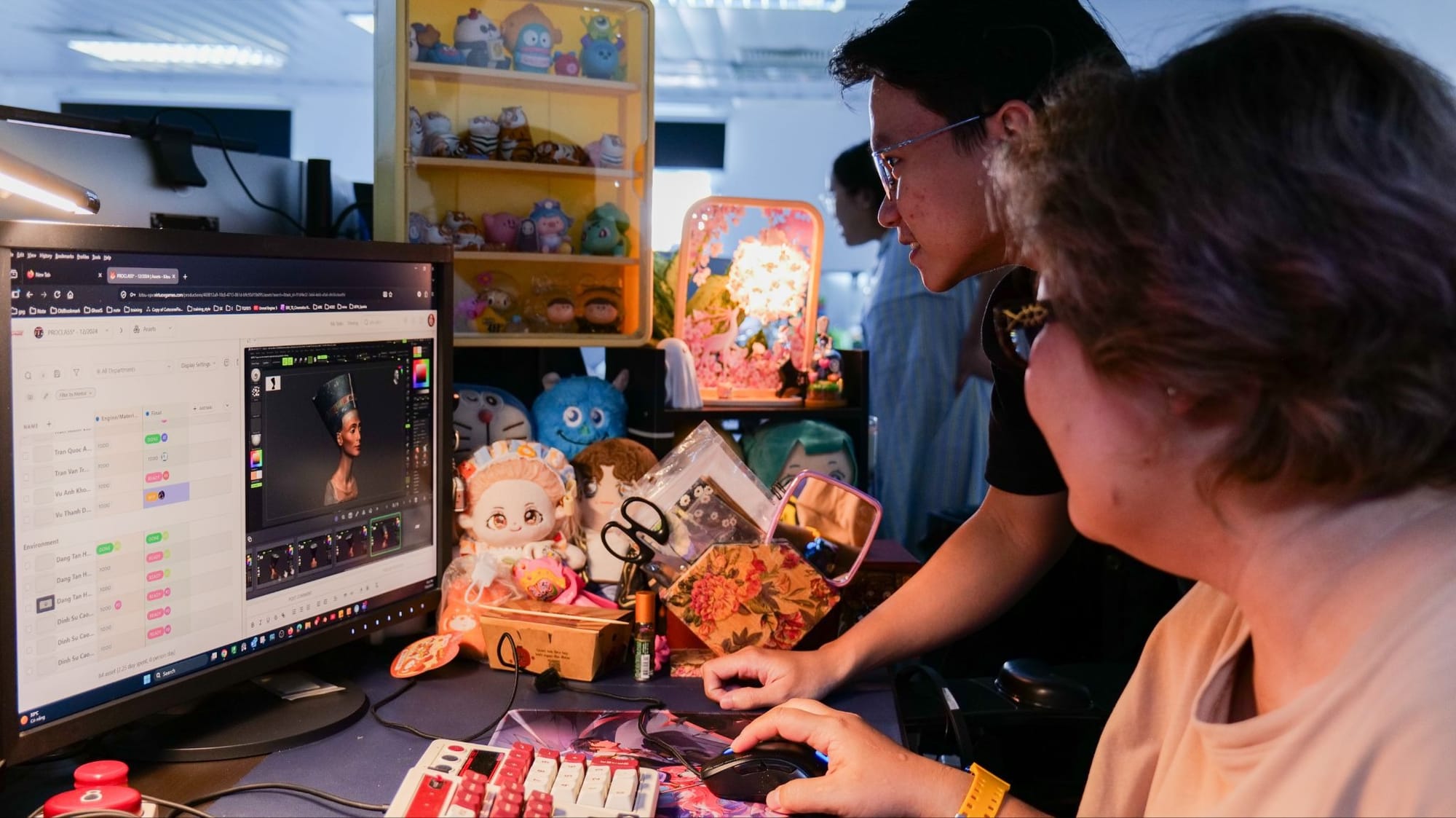
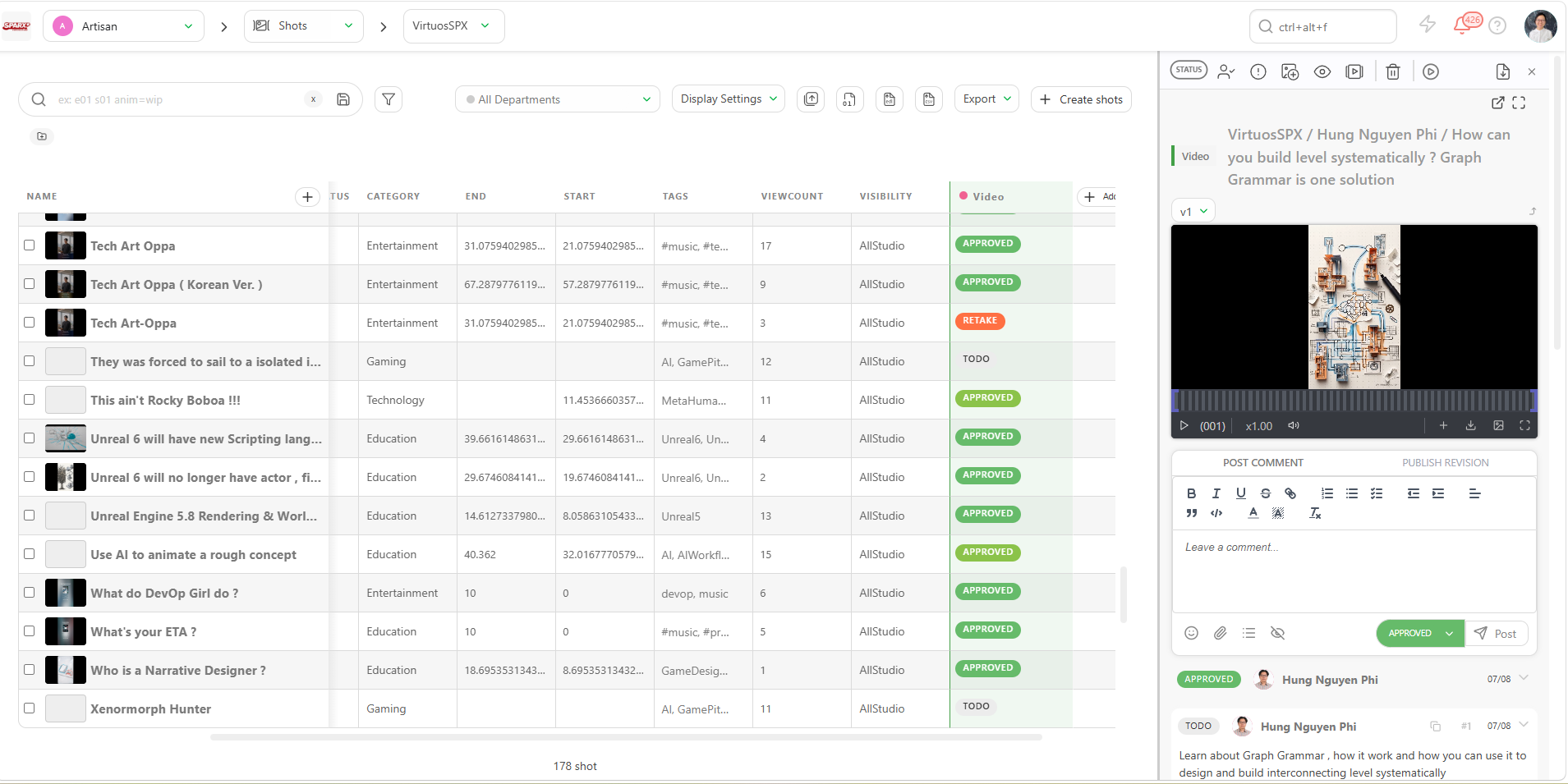
Kitsu, the open-source production tracker developed by CGWire, is built specifically for the animation, VFX, and game art production context. It organizes work around assets and shots, tracks task statuses, manages reviews, and provides production-wide visibility into the state of a project. It is designed to be deployed and maintained by studios themselves.
Sparx*'s first use of Kitsu was deliberate and scoped: they used it to track assets for in-game cinematics. The initial project was SpongeBob SquarePants: The Cosmic Shake, the colorful platformer that leaned heavily on animated cinematics. It was a meaningful test. A real production, with real deadlines, real assets to track, and real consequences if the tracking failed.
Nguyen Phi Hung, the Lead Technical Artist who had championed the switch internally, wanted to know quickly whether the tool could hold up under actual pressure.
It did not fail. And the benefits became quickly apparent.
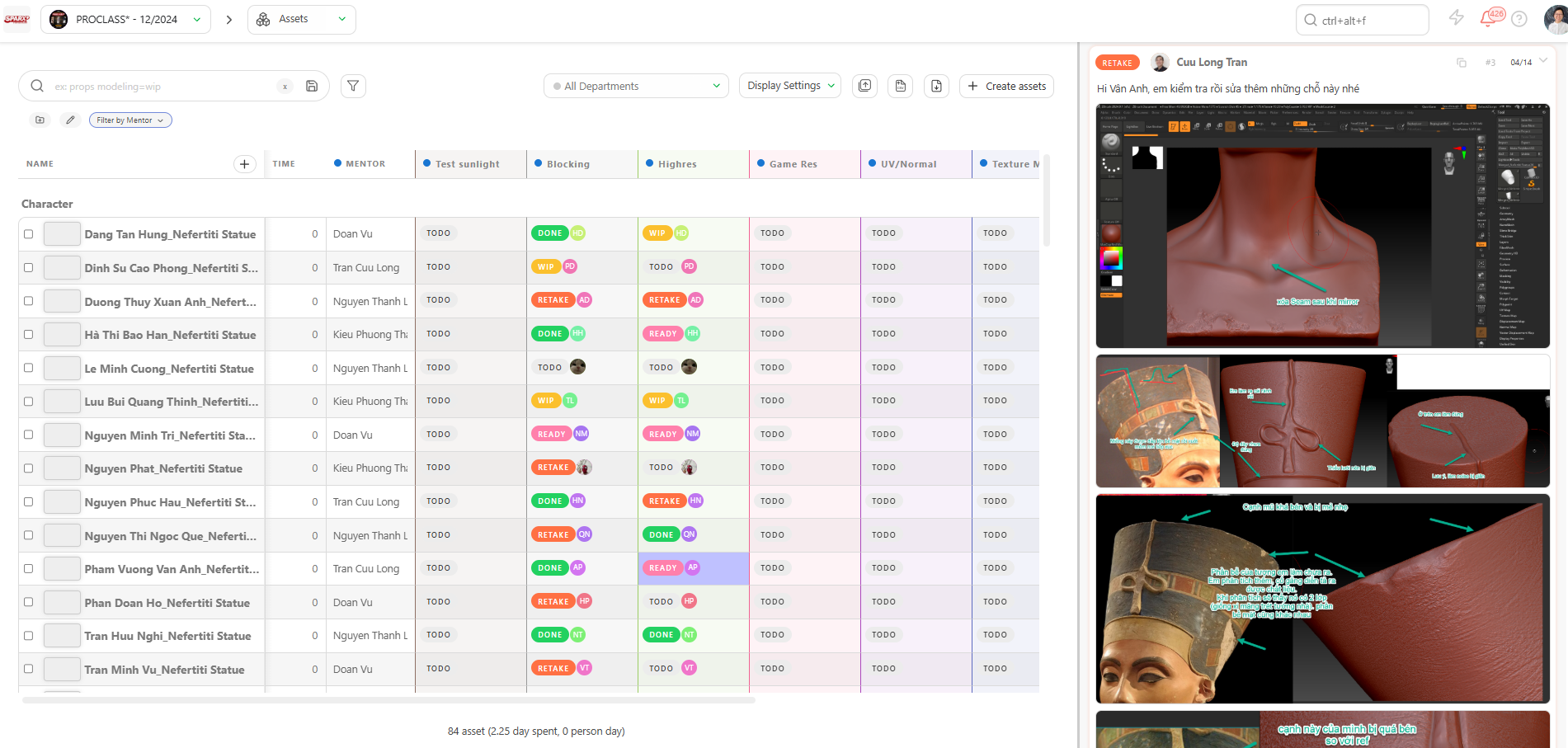
For a large studio spread across multiple concurrent projects, Kitsu delivered something that can be surprisingly difficult to achieve at scale: a single, reliable view of where everything stands. Production leads could see task statuses without chasing down individual artists. Reviewers could leave feedback tied directly to specific versions of an asset. Supervisors could spot bottlenecks before they became emergencies. The kind of visibility that previously required extensive coordination overhead was now embedded in a single tool.
Perhaps more surprisingly, the operational cost of running Kitsu turned out to be even lower than expected: Sparx*instances are maintained by a single person!
"Kitsu has been a reliable foundation for our cinematic production pipeline. Its flexibility allows us to tailor workflows to our specific needs, while its straightforward technology stack makes maintenance and customization highly efficient. With only one dedicated developer, we are able to support production, manage client feedback, and continuously improve the platform to meet evolving project requirements."
Nguyen Phi Hung, Lead Technical Artist at Sparx*
For a leadership team that had grown accustomed to the weight of enterprise software maintenance, this was a meaningful discovery: Kitsu had delivered enterprise-scale visibility without enterprise-scale overhead. That combination made it not just a tracking tool but the central production layer around which Sparx* built a broader pipeline.
Customizing Kitsu for a AAA Production Environment
Sparx* did not simply install Kitsu and move on, but actively shaped it to fit a demanding production culture.
The studio runs its own fork of the Kitsu / Zou codebase. This decision preserves the ability to make changes on its own schedule, tailor the interface to its specific workflows, and ship improvements without waiting for those changes to be accepted into the main project. But it's also designed to keep receiving upstream releases.
Most of the modifications Sparx* has made are frontend-oriented, with changes to how the product looks and behaves for the artists and producers using it every day.
Several of these modifications reflect the specific demands of AAA game art production. The comment editor has been improved to support more structured feedback (important in an environment where the difference between "approved" and "approved with notes" can affect dozens of downstream tasks). Additional metadata fields have been added to track information specific to Sparx*'s DCCs and other pipeline integrations. And workflow enhancements with an automation focus have been introduced to reduce the manual steps between task completion and the next stage of the pipeline. The kind of small, specific improvements that accumulate into a meaningful difference between software that technically does what you need and software that actually fits how you work.
Adoption across the studio is strong, though not uniformly so across all of Kitsu's features. The core tracking functionality, including task statuses, asset reviews, production dashboards, etc. is heavily used and well embedded in daily workflows.
Some of the more producer-oriented features, including budget tracking and detailed reporting pages, have seen lighter adoption. Teams managing those aspects of production continue to rely on Jira for some production management features. This is not unusual for a large creative organization integrating new tooling. The opportunity, as Sparx* sees it, lies in additional documentation and training to make sure producers understand not just that a feature exists, but why and how it fits into their specific work.
"Kitsu is not only an essential part of how we manage cinematic production internally.We have also incorporated Kitsu in our production management with our vendors and clients in recent projects. Its feature set supports multiple stages of our workflow, including daily reviews, asset and shot tracking, automated workflow transitions, dependency management, and progress reporting. The platform’s simplicity enables our teams to quickly identify opportunities for improvement and work closely with developers to implement custom solutions tailored to each project."
Huynh Do Hieu Hanh, Technical Producer at Sparx*
How Zou Powers the Entire Pipeline
Zou is the Python backend that defines how projects, assets, shots, tasks, and people are represented, how they relate to each other, and the corresponding server processes. When Sparx* adopted Kitsu, they were adopting a data architecture, and that architecture turned out to be the more transformative part of the relationship.
Over time, Zou evolved from a production database into something more fundamental: the connective tissue of Sparx*'s entire studio infrastructure.
The data that lives in Zou now feeds into multiple internal systems simultaneously. One of the key integrations is with Prism, the pipeline management tool that many studios use to organize their digital content across software applications and storage systems. By connecting Prism to Zou's data, Sparx* created a pipeline where production tracking and file management share a common understanding of what assets exist, what state they are in, and where they live.
Beyond that, Sparx*'s technical team has built a suite of custom plugins around Kitsu data. These plugins reach into the digital content creation tools that artists use every day. In Autodesk Maya, publishers built around Zou data allow artists to submit completed assets directly into the pipeline with appropriate metadata, without manual intervention. In Unreal Engine, similar integrations enable shots and assets to be tracked and updated from the DCC interface itself.
Not all of Kitsu's applications at Sparx* are what CGWire originally had in mind.
In one of the more entertaining examples of creative infrastructure reuse, the studio has built an internal video platform on top of Zou: a system for storing, processing, and browsing video content that functions something like an internal TikTok.
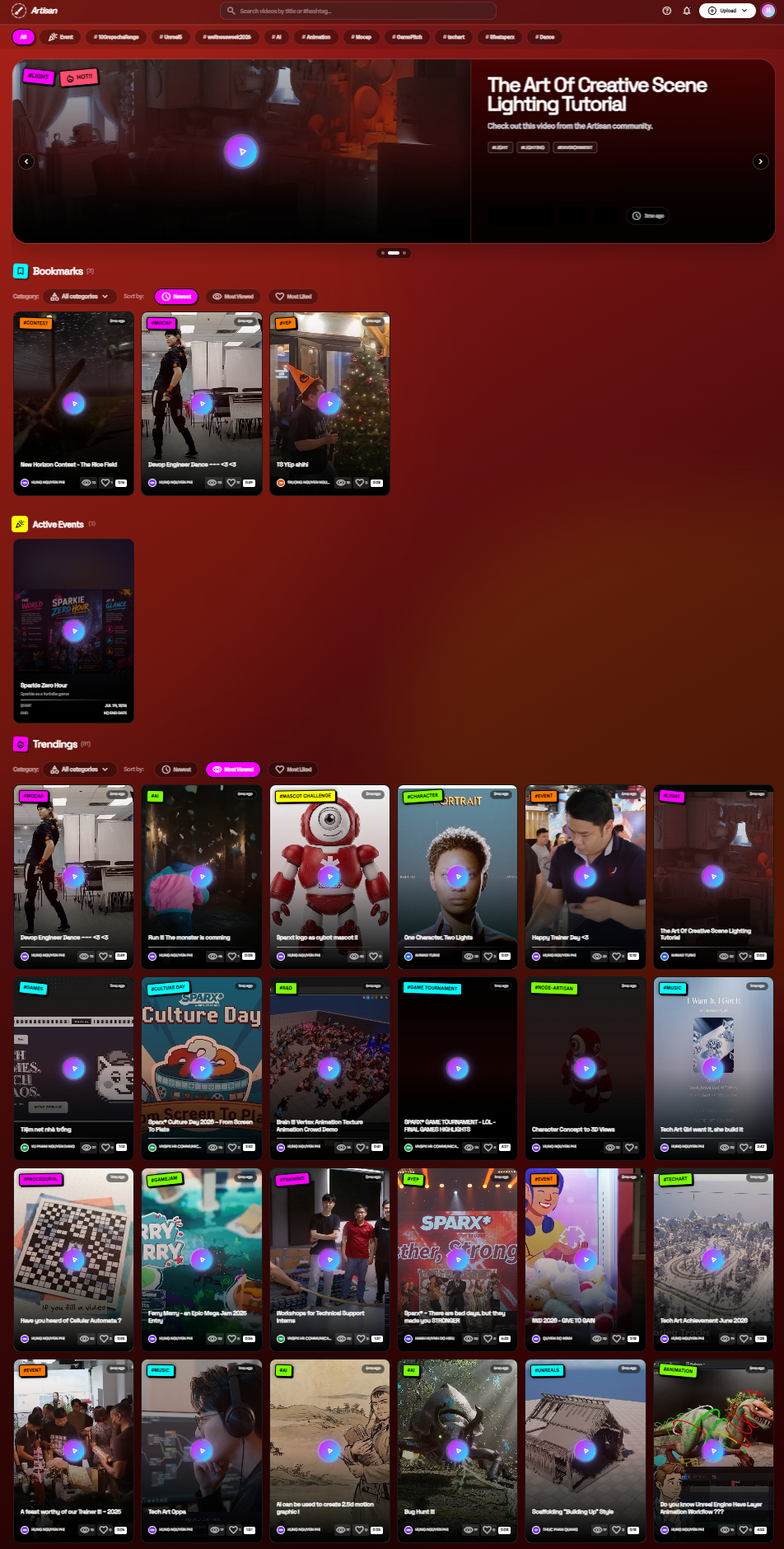
The fact that a production database originally designed to track animation tasks now powers a video-sharing application is a testament to what happens when technical teams are given genuine ownership over their infrastructure. That's the kind of secondary use case that only emerges when a foundation is genuinely flexible: the team found a problem, looked at what they already had, and solved it without standing up new infrastructure.
Training the Next Generation of Vietnamese Game Talent
Technology is only part of the story. The other part is people, and Vietnam's game industry faces a significant people challenge.
Sparx* has integrated Kitsu into its internship programs to expose students to the real workflows of a AAA production environment before they enter the industry. Participants from institutions like MACC (a renowned design and creative arts academy in Ho Chi Minh City) come through the studio and encounter Kitsu not as a training simulation but as a live production system: they track real tasks, submit real assets for review, and receive real feedback through the same tools that experienced artists use.
The gap between academic preparation and professional reality has long been a friction point in creative industries. By putting interns inside actual production workflows from the beginning, Sparx* compresses that gap and produces graduates who arrive at their first jobs already familiar with professional production management workflows.
The scale of what Vietnam's game industry needs is considerable: industry forecasts project demand for up to 30,000 workers over the next few years as the country's digital entertainment sector continues to expand. Meeting that demand requires not just hiring but building the educational infrastructure that can reliably produce qualified graduates in game design, programming, and graphics at scale.
That infrastructure does not yet fully exist. Specialized training programs remain scarce relative to the demand, and many of the programs that do exist were designed for adjacent fields rather than game development specifically. The skills that AAA production requires like technical art, rigging, real-time rendering, or pipeline development are not yet systematically taught in Vietnamese institutions.
Sparx* cannot solve this problem alone, but the studio has made a deliberate choice to be part of the solution by combining direct recruitment with vocational training, identifying talented people early and developing them inside the studio, rather than waiting for the education system to produce fully formed candidates.
The longer ambition is to help build a sustainable AAA talent pipeline for Vietnam as a whole that expands the talent pool through genuine investment in early-career development.
Conclusion
The trajectory of Sparx* over the past three decades describes an industry forming around itself. The slow accumulation of skill, infrastructure, credibility, and ambition that transforms a low-cost production satellite into a genuine creative partner on the world's most demanding projects.
What began as a straightforward search for a more affordable alternative evolved into a broader architectural project: building an open, adaptable production ecosystem capable of connecting artists, tools, and systems in ways that proprietary platforms had not permitted.
It's now the foundation on which Sparx* runs its daily operations. Tracking assets across hundreds of concurrent tasks, feeding data into Maya and Unreal Engine, powering pipeline automation, and even, in one unexpected corner, running an internal video platform.
The timing is significant. Artificial intelligence is changing how content is produced across games, animation, and visual effects. Studios are rethinking their pipelines, exploring automation for tasks that once required manual attention, and looking for frameworks capable of orchestrating increasingly complex workflows between human artists and machine-assisted tools. The studios best positioned to navigate that shift are those that have already built production infrastructure they understand and control. Infrastructures that can be extended, modified, and integrated with new systems as the technology evolves.
For Sparx*, that foundation already exists. The bet on open source is, in retrospect, a bet on adaptability. The ability to respond to an industry that never stops changing. Whatever pipelines look like in five years, Sparx* will not be waiting for a vendor to support them.